Author: Tajala Kelly

More Than a Network: How Angel Livas Is Building Space, Power, and Ownership for Black Creators

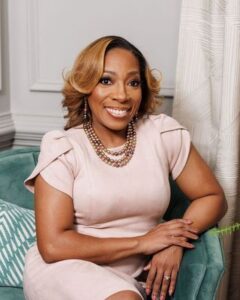
Angel Livas at ALIVE Studios

There are moments in culture when someone quietly builds the kind of infrastructure that changes everything — not overnight, not loudly, but steadily, intentionally, and with purpose rooted in community.

Angel Livas is doing exactly that.

As the founder of ALIVE Podcast Network, Livas has grown what began as a small audio platform into a global ecosystem for Black storytellers — a place where voices are not simply amplified, but protected, supported, and positioned to thrive. Four years in, the milestone is not just about numbers. It is about proof that when creators are given ownership of their narratives, something powerful happens.

“We started with two podcasts,” Livas shared during our conversation. “Now there are more than a hundred voices connected through the network. It’s about making sure people know their voice matters.”

And yet, she speaks about growth with humility rather than celebration. For her, success is less about arrival and more about responsibility — the responsibility to keep building, to keep creating space, and to keep pushing forward even when the path feels uncertain.

Building Something Bigger Than Content

ALIVE Podcast Network did not begin as a grand ecosystem. It started with a simple idea: create a home for Black storytelling. But like many visions rooted in purpose, it expanded beyond its original shape.

What was once audio-only now spans streaming television platforms, creator tools, and a growing digital marketplace designed to help entrepreneurs share not only their stories but their products and services.

“I thought it would always be audio,” Livas reflected. “But the vision kept growing. It became about creating a full environment where creators can learn, distribute, and monetize what they build.”

The evolution feels less like a business pivot and more like a natural unfolding — a reminder that sometimes the most meaningful growth happens when we allow vision to expand beyond what we initially imagined.

A Studio at the Center of Influence

One of the most striking developments in the network’s journey is the launch of a state-of-the-art production studio inside Washington, D.C.’s Ronald Reagan Building, just steps from the White House.

For Livas, the location is symbolic.

“This isn’t just a podcast studio,” she explained. “It’s a full production space — a place where our stories can exist at the same level as any major broadcast.”

But beyond the technology and lighting rigs lies a deeper intention: ownership.

In a media landscape where shows can disappear overnight and creators often feel replaceable, building a permanent physical space feels like an act of cultural grounding — a declaration that Black creators deserve rooms designed with them in mind.

“I want people to walk in and say, ‘I created something here. I told my story here.’ That’s powerful.”

Leadership Shaped by Fire and Faith

Behind every polished milestone are moments of uncertainty that rarely make headlines. Livas spoke openly about the challenges of stepping into the tech world as a non-technical founder — navigating unfamiliar territory while carrying the weight of investment, expectation, and vision.

“The biggest lesson is perseverance,” she said. “You have to walk through the difficult parts to reach what’s on the other side.”

That perseverance has reshaped her leadership style, teaching patience and the importance of stepping back when necessary.

“Sometimes you have to pull back in order to move forward,” she explained, comparing growth to a toy car that must be wound backward before it races ahead.

It is a reminder that leadership is not always about constant motion — sometimes it is about knowing when to pause, reflect, and realign.

Wellness, Purpose, and the Stories That Heal

Among the network’s newest projects is ALIVE & Well, a show dedicated to founders whose work grows from deeply personal experiences. The inspiration comes from observing how often innovation is born from necessity — from people who create solutions because they could not find them elsewhere.

“It’s about being alive in everything you do,” Livas said. “Not just surviving, but building from a place of wellness and purpose.”

The series reflects a broader shift in storytelling — one that values transparency, healing, and impact over surface-level success.

Giving Flowers Without Conditions

Programs like the Eminence Leader Badge highlight founders making measurable contributions to their communities. Unlike traditional recognition programs driven by sponsorship dollars, this initiative centers community validation.

“I wanted it to come from the people,” Livas said. “Not from someone paying to be seen.”

The philosophy is simple yet powerful: when we celebrate each other authentically, we create ecosystems where success feels collective rather than competitive.

Advice Rooted in Intention

When asked what guidance she would offer aspiring creators, Livas returned to the fundamentals.

“Know your audience. Be consistent. Build systems,” she said. “Structure creates sustainability.”

It is advice that feels less like a formula and more like an invitation — a reminder that building something meaningful requires clarity, discipline, and a willingness to grow beyond comfort.

A Vision Still Unfolding

As ALIVE Podcast Network moves into its next chapter, Livas remains focused not just on expansion but on legacy — building spaces where creators can stand fully in their voice without fear of being erased.

“This isn’t just about content,” she said quietly. “It’s about ownership.”

And in a world where stories are often filtered through someone else’s lens, that ownership may be the most powerful narrative of all.

Nine Losses, Two Brain Surgeries, One Mission: Rachell Dumas Is Changing How Women Are Heard in Healthcare

How Rachell Dumas Turned Nine Pregnancy Losses, Medical Dismissal, and Survival Into a Blueprint for Advocacy

Rachell Dumas, CEO & Founder

Some stories don’t begin with a title or a résumé. They begin with a moment — a moment when your body is sounding an alarm, and the people who are supposed to help you treat it like background noise.

For Rachell Dumas, that moment didn’t happen once.

It happened again and again — across appointments, emergency rooms, pregnancy losses, postpartum complications, and dismissive conversations that demanded she prove pain before she could receive care.

She is a registered nurse with advanced training. She speaks the language of medicine. She understands charts, protocols, and systems. And still, she found herself in the same position too many Black women know intimately: trying to survive a system that doesn’t always believe you deserve to.

“I had a different lens when it came to what patients go through,” she told me. “Once I became pregnant and started that journey, I experienced racism in the healthcare system — being dismissed, being medically gaslit.”

Then she said something that should stop all of us cold.

She had to fly from Atlanta to Dallas to save a pregnancy — because her concerns weren’t being taken seriously at home.

That experience wasn’t just traumatic. It was clarifying.

Because sometimes pain doesn’t just break you — it reveals what has been broken all along.

A Turning Point That Should Never Have Happened

In 2020, Rachell was pregnant with twins. She was bleeding. She went to the emergency room, followed up with her OB, and later returned with severe pain — “10 out of 10,” she said — vomiting, sick, and certain something was wrong.

She describes being sent home. Dismissed.

Then she lost one baby.

Later, on the day of her gender reveal, she woke up wet, went to the bathroom — and lost the other baby.

When she returned to the hospital and told the doctor what happened, the doctor questioned whether she had even been pregnant.

Rachell Dumas with her baby

From Personal Pain to Public Purpose

Rachell has been a nurse for nearly a decade, but her experience as a patient transformed how she understood medicine.

Now I started to look at what patients go through from a patient’s lens,” she explained. “People can’t always speak the medical jargon to advocate for themselves. They know something is wrong, but they don’t always have the language — and they don’t know what they don’t know.”

That gap became her mission.

It’s why she founded A Light After Nine, a nonprofit supporting not only mothers but entire villages — families navigating pregnancy loss, infertility, and maternal trauma through education, advocacy, and community.

Because loss doesn’t land on one person.

It lands on relationships, identities, bodies, and futures.

And too often, people are expected to carry it quietly.

HEARD Was Born When Even Her Degrees Didn’t Protect Her

After giving birth to her son, Rachell thought the medical trauma might finally be behind her.

It wasn’t.

Six months postpartum, she woke up with vision loss and stroke-like symptoms. She went to the hospital, explained what was happening, and says she was misdiagnosed with a stomach bug — sent home without vision.

So she did what too many patients are forced to do: she sought care elsewhere.

At another ER, she was placed into stroke protocol and diagnosed with a rare brain condition — idiopathic intracranial hypertension — caused by fluid building up in her head. She later underwent two brain surgeries.

Even as a nurse. Even with medical knowledge. Even speaking the language.

She still had to research, advocate, and fight for her own care.

Her conclusion was simple and powerful:

If she had to do all that, what happens to the patient who doesn’t know where to start?

That’s why she created HEARD, a patient advocacy platform designed to help people document concerns, communicate clearly with providers, and escalate when they feel dismissed or unsafe.

“Patients cannot do these things and don’t have these resources,” she said. “So I created HEARD to level the playing field.”

The Real Problem Isn’t the Patient

When I asked why so many patients feel unheard, Rachell didn’t blame the people already suffering.

She named the truth.

“It’s not really a patient issue. It’s really the provider issue.”

Patients become exhausted. After repeating symptoms again and again without being believed, many stop trying. And healthcare systems aren’t always designed for clarity or compassion.

Her advice was practical and powerful:

Bring someone with you. Someone who can listen, take notes, and help repeat your story back when you’re tired.

She also addressed an uncomfortable reality — medical jargon still influences who gets listened to.

That’s why platforms like HEARD matter. They help patients translate lived experience into language the system respects.

A Personal Question, and a Grounding Answer

As a 28-year-old Black woman who hasn’t had children yet, I asked what many women are thinking but don’t always say out loud: I’m afraid of not being listened to. I’ve considered home birth, a doula — anything that feels safer.

Her answer started before pregnancy even begins.

She emphasized preconception care — thorough checkups, labs, understanding your baseline health — so issues are identified early instead of discovered during crisis.

Then she said it plainly:

“Get you a doula as soon as possible. The research shows having a doula improves healthcare outcomes… They bridge the gap.”

A doula helps interpret, advocate, communicate, and hold steady when your body is doing something entirely new.

Because pregnancy can be beautiful — and exhausting.

And no one should navigate it alone.

Trauma-Informed Care Looks Like Preparation, Respect, and Listening

When I asked what trauma-informed care should truly look like, Rachell described something simple — and radical.

Know your patient before entering the room.

Make appointments meaningful.

Ask about mental health, financial stressors, and support systems.

Include partners and families instead of sidelining them.

Above all, listen and believe your patient.

It sounds basic.

And yet it is the piece most often missing.

What Needs to Change: Research, Access, and Affordability

Rachell’s vision for maternal health equity bridges policy and humanity.

She highlighted the need for inclusive research — because when Black patients aren’t represented in studies, treatments may not reflect our realities.

She also spoke about coverage gaps and rising costs. When care becomes unaffordable, patients delay visits — and delayed care often turns preventable issues into emergencies.

Affordable healthcare isn’t a luxury.

It is how we reduce harm.

It is how we keep mothers alive.

Sometimes the Best Support Is Silence

One of the most powerful moments in our conversation came when I asked what validation looks like during grief.

Her answer wasn’t a script. It was honesty.

“Sometimes we don’t have to say anything,” she said. “We just need to share silence with people.”

Because even well-intentioned words can miss the mark.

Instead of performing comfort, she encourages presence. Accountability. Listening without needing to fix.

A Legacy Measured in Lives Saved

When I asked what legacy she hopes A Light After Nine and HEARD will leave, her answer was expansive.

“I hope that billions of people are able to save their lives, or save the lives of others through advocacy.”

And then she spoke about her son — a three-year-old toddler whose existence reflects resilience, survival, and purpose.

Before we ended, she reassured me:

There are more positive birth stories than negative ones.

But the negative ones are loud, harmful, and devastating enough that preparation, advocacy, and supportive care are non-negotiable.

“Advocate for yourself,” she said. “Get that support… and leave if they’re not paying attention.”

There was no fear in her voice.

Only clarity.

And clarity, in this moment, is a form of power.

“They Didn’t Listen”: Why So Many Black Patients Leave the Doctor Feeling Dismissed

Social Justice Advocate, Angela Greene

If you have ever walked out of a doctor’s office with more questions than answers, if you have ever felt rushed, unheard, or quietly dismissed, I want to begin here: what you felt was real. Too many Black patients leave medical spaces carrying not just diagnoses, but doubt—about whether their pain mattered, whether their concerns were taken seriously, and whether they were seen as fully human.

For many Black families, healthcare does not feel neutral. It feels fragile. It feels conditional. And too often, it feels like survival depends on how much you are willing to advocate for yourself.

In a deeply honest conversation on social justice and equity in the medical space, advocate Angela Greene and physician Dr. Eboni January named what so many people experience but struggle to articulate: healthcare inequity is not random. It is systemic. It is shaped by power, policy, and whose lives have historically been valued.

“Healthcare inequity boils down to who has money and who has power,” Greene said. “This system was never built to be fair, and it was never built with us in mind.”

Naming the System, Not the Individual

Angela Greene did not frame this issue as a collection of unfortunate moments or individual failures. She spoke about systems—the structures that quietly shape outcomes long before a patient ever enters an exam room. Repeated dismissal, she explained, sends a message that does not end when the appointment does.

“It reinforces the message that we don’t matter, that we don’t belong, or that we’re not worthy,” Greene said.

Over time, those messages settle into the body. They shape how people view their health, their worth, and whether seeking care feels safe at all. Mistrust is not something communities invent. It is something they learn through lived experience.

Physician & Black Maternal Health Advocate, Dr. Eboni January

A Doctor Who Knows Both Sides of the Exam Room

Dr. Eboni January offered a perspective that bridges two worlds—the clinician and the patient. She understands the system because she works within it. She understands the harm because she has lived it.

“I’m fighting two wars,” she said. “The same biases my patients face, I face too.”

She described bias not as an abstract idea, but as something that shows up in daily interactions—professional disrespect, assumptions about intelligence, and the dangerous minimization of symptoms. These experiences do not disappear at the end of a shift. They accumulate. They exhaust. And over time, they push many physicians of color out of the field entirely.

“We’re exiting the field or not going into it at all because of the biases presented to us,” Dr. January said.

When doctors of color leave medicine, communities lose more than representation. They lose trust. They lose advocates. And they lose access to care that feels safe.

Why Access Alone Is Not Enough

One of the most common misconceptions about healthcare is that access guarantees fairness. Greene and Dr. January made clear that this belief does not match reality.

“No matter your education or economic status, you are still at risk,” Dr. January said. “Equal access does not mean equal outcomes.”

Black patients may enter the same hospitals, see the same technology, and still receive different care. Delays in treatment, assumptions about pain tolerance, and less urgency—particularly in high-stakes moments—continue to shape outcomes. When trust erodes, people wait longer to seek help. Preventive care is postponed. Emergencies become the entry point into the system.

And the cycle repeats.

The Harm We Don’t Measure

Some of the most lasting damage caused by medical dismissal cannot be found in charts or discharge summaries. It lives in fear. It lives in hesitation. It lives in the quiet decision to stop going to the doctor altogether.

“When patients don’t trust the system, they avoid care until it’s an emergency,” Dr. January said. “And that creates a vicious cycle.”

This cycle is often passed down. Children watch how their parents are treated. Families share stories of being ignored or dismissed. Long before someone schedules their own appointment, they have already learned what to expect.

The Myth of Neutral Healthcare

The belief that healthcare is neutral often belongs to those who have never been harmed by it. As Dr. January explained, “Your perspective becomes your reality.”

For families who have witnessed loved ones restrained, ignored, or threatened for advocating for themselves, neutrality is not an abstraction. It is a myth. Bias does not always announce itself loudly. More often, it hides in policy, in silence, and in decisions delayed just long enough to cause harm.

What Real Change Requires

Both Greene and Dr. January agreed that meaningful change requires more than statements or good intentions. It requires accountability. It requires systems that value culturally competent care. It requires training that is ongoing, measurable, and tied to real outcomes.

Dr. January emphasized education—not just for providers, but for patients—so people are empowered to advocate for themselves with clarity and confidence.

“Give yourself a fighting chance against racism,” she said.

Greene reminded us that advocacy and visibility are essential tools for accountability.

“If we don’t tell these stories, who else is going to do it?” she asked.

Why These Stories Matter

Dr. Eboni January

Stories are not distractions from data. They are how truth becomes undeniable. Black media plays a vital role in connecting history to present-day outcomes and helping communities understand what care should look like—and what should never be accepted as normal.

“When you don’t have a doctor who looks like you, you’re going to have a problem,” Greene said, pointing to the widening gap between patients and providers they trust.

A Conversation That Stays With You

This discussion reflected the lived realities of countless Black families—ignored pain, delayed diagnoses, and consequences that could have been prevented if someone had simply listened.

Healthcare inequity affects real bodies. Real families. Real futures.

And as this conversation makes clear, equity in the medical space is not a luxury. It is not optional. It is urgent. It is personal. And it is long overdue.

Aaliyah Duah Is Making Financial Literacy Fun — And Gen Z Is Finally Listening

CEO/Founder of Financial Revolutionn, Aaliyah Duah

Some people talk about wealth. Aaliyah Duah is building a whole movement around it — and she’s doing it in a way Gen Z can actually understand, connect to, and enjoy.

In our sit-down, Aaliyah broke down how she started Financial Revolutionn as a teenager, why she refuses to teach finance in a boring way, and how she’s using games, media, and real-life examples to shift how young people think about money — starting now, not “one day.”

“I saw us with $1,000 shoes and $0 in our pockets.”

Aaliyah told me she was exposed to entrepreneurship early — both of her parents are entrepreneurs — but what really pushed her was watching her generation make money choices without the right tools.

She said the difference wasn’t that finance was “boring.” It was that she had to figure out how to make people care — because people already knew her as the “basketball and jokes” girl, not the finance girl.

Then one day, she made a decision:
“I’m gonna start a financial revolution.”
She created the page, committed to the mission, and didn’t look back.

The book that flipped the switch

When Aaliyah started reading Rich Dad Poor Dad, it challenged what she thought she knew about money. That opened the door to everything else — podcasts, books, learning the language of wealth — until she reached a point where keeping it to herself didn’t feel right.

She explained that this information doesn’t just affect one person. It spreads.

“If I can get my peers on a revolution… they can impact their circles too. It becomes a domino effect.”

The #1 thing Gen Z is missing: starting NOW

One of the biggest gems Aaliyah dropped was simple, but powerful:

If you can’t budget with $10, you won’t budget with $10,000.

She believes Gen Z often waits to “have money” before building habits — but the habits are what create stability when the money comes.

The biggest early mistake: listening to too many voices

Aaliyah didn’t give the usual internet answer. She said one of the biggest mistakes young people make is over-consuming advice.

With so many people online yelling “Do this! Do that!” it creates confusion — and confusion leads to doing nothing.

Her advice: pick one or two trusted sources for financial guidance, and focus.

Why she made a game instead of a class

Aaliyah made it clear: finance is serious, but learning it doesn’t have to feel like punishment.

She created Broke or Brilliant, a financial literacy game built around competition, fun, and those “aha!” moments people remember.

And when we actually started playing on camera? The energy shifted instantly — laughing, guessing, learning, and turning missed answers into teaching moments.

That’s the point.

“People learn when it’s fun… when it’s a moment.”

A game-to-game moment: Culture Ticket meets Broke or Brilliant

Broke or Brilliant card game

Since I have my own game (Culture Ticket Revoked), we had a dope exchange where we played each other’s styles.

She asked me a question from Broke or Brilliant — and I got introduced to the 529 plan (a college savings plan for kids). What I loved most? The game doesn’t just tell you you’re wrong — it

 tells you why, so it becomes knowledge you can actually use.

Then I hit her with my Culture Ticket music questions… and let’s just say, we had a few “brain freeze” moments on BOTH sides. 😭

That part of the interview was important because it showed something real: even smart people blank sometimes — but the learning sticks when it’s interactive.

Being a young Black woman in finance spaces

Aaliyah said she doesn’t let demographics intimidate her. She walks into rooms knowing she deserves to be there — and she stays confident by staying prepared.

Her mindset is simple: confidence comes from pouring into yourself.

The “3 money moves” Aaliyah wants people to make

When I asked what someone can do today if they feel behind, she gave practical steps:

  1. Open a high-yield savings account (instead of a regular savings account)

  2. Open a brokerage account

  3. Start investing consistently — even if it’s small

Her message was loud and clear: you don’t need to wait for the “perfect” moment to start building your future.

The legacy she’s building

Aaliyah’s ultimate goal isn’t just teaching people finance. It’s teaching people that it starts with them.

And when one person shifts, it impacts families, circles, communities — and creates opportunities that can last beyond one lifetime.

Tap in with Aaliyah Duah

To learn more, follow Aaliyah’s work and check out her platform here:
Financial Revolutionn:

GET THE CARD GAMES HERE https://financialrevolutionn.myshopify.com/

WATCH FULL INTERVIEW HERE https://youtu.be/_BVaVU5SGEc

Beyond the Spin: Kayla Tucker Adams on Power, Purpose, and Telling the Truth in Public Relations

KTA MEDIA GROUP CEO & FOUNDER, KAYLA ADAMS

  In an era where visibility is often confused with virality, Kayla Tucker Adams stands firmly in a different lane—one rooted in truth, strategy, and long-term impact.

As an award-winning public relations executive and the founder of KTA Media Group, Kayla has spent more than two decades shaping narratives that don’t just make noise, but move people. From Fortune 100 companies and national nonprofits to education leaders, authors, and change-makers, her work proves one thing: PR isn’t about spin—it’s about storytelling with integrity.

I sat down with Kayla in Atlanta for a candid conversation about leadership, representation, crisis, mentorship, and what it really takes to build a brand that lasts.

From the Church Aisle to the Media Spotlight

Kayla’s journey into communications didn’t begin in a boardroom—it began in the church.

Raised in Texas, she discovered her gift for communication early on through Easter and Christmas speeches, Sunday school teaching, and youth leadership roles. Public speaking wasn’t something she learned to overcome—it was something she naturally embraced.

“I was never afraid to get up and speak,” Kayla shared. “That confidence and love for storytelling started very young.”

Inspired by legendary media figures like Oprah Winfrey and trailblazing Black anchors in the Dallas–Fort Worth market, Kayla pursued a degree in radio and television broadcasting with a minor in business—laying the groundwork for what would become a powerhouse career in public relations.

Why PR Is Strategy—Not Spin

One of Kayla’s strongest convictions is also one of her boldest: PR without strategy is ineffective.

At KTA Media Group, every client relationship begins with deep listening. Before pitching a single outlet, Kayla wants to understand how clients see themselves—and why.

“Your brand story is the foundation. Without it, visibility won’t land where it needs to.”

Her team builds detailed PR and visibility roadmaps—strategic blueprints that guide everything from messaging and media placement to long-term brand elevation. The goal isn’t just press; it’s progression.

The Two Biggest Gaps Brands Walk In With

According to Kayla, most clients arrive with passion—but often missing two critical pieces:

  1. The right budget

  2. Realistic timelines

Many people understand they need exposure but don’t fully grasp the difference between PR and marketing—or the time it takes to build credibility from the ground up.

“Visibility is built, not rushed,” she explained. “We don’t wake up one day and land national TV without a foundation.”

Leadership, Flexibility, and Unlearning Limits

As a Black woman leading in high-stakes spaces, Kayla credits adaptability as one of her greatest leadership lessons.

She also had to unlearn something surprising: saying no too soon.

“I learned never to say what I don’t do,” she said. “Because growth will stretch you into spaces you never expected.”

That openness has allowed KTA Media Group to expand into advocacy, policy-adjacent work, entertainment, and industries far beyond its original scope—without losing its strategic core.

Narrative Equity: Why Representation Still Matters

In today’s political and media climate, Kayla believes narrative equity is non-negotiable.

She emphasizes the continued importance of Black and minority media—not just for representation, but for accuracy, cultural context, and truth.

“We tell our stories better. And we tell them with responsibility to our communities.”

From global education stories to culturally nuanced coverage, Kayla’s work highlights what’s at stake when stories are misrepresented—or not told at all.

Crisis Management: Less Talking, More Truth

When brands face crisis, Kayla sees one mistake more than any other: talking too much, too fast.

Social media reactions, premature statements, and defensive responses often make situations worse. Her advice?

Stop. Assess. Tell the truth. Investigate. Then rebuild.

“Even if the narrative isn’t true, the crisis still happened—and your brand still needs repair.”

PR as a Tool for Real Community Change

Some of Kayla’s favorite work lives at the intersection of visibility and service.

From scholarship programs and food drives to community give-backs and nonprofit partnerships, she believes PR should amplify impact—not ego.

“When people see leaders doing good, it inspires them to do good too. Influence creates ripple effects.”

Mentorship as a Responsibility, Not a Bonus

Mentorship isn’t an add-on for Kayla—it’s a calling.

She regularly speaks at colleges and universities, hires interns who grow into leaders, and pours into young professionals navigating PR without a roadmap.

One press release lesson from a legendary journalist early in her career still shapes how her team writes today—a reminder that knowledge shared can change generations.

Rest, Boundaries, and Sustainability

Despite working long hours, Kayla is intentional about self-care.

Her priorities are clear: prayer, movement, health, and boundaries.

“I’m not scheduling meetings before my workout,” she said plainly. “That’s non-negotiable.”

Her philosophy is simple: the work will always be there—but you have to be well enough to do it.

Advice for Women Seeking Visibility

For women who want to be seen but don’t know where to start, Kayla’s advice is direct:

Execute.

Start with free tools. Share your journey. Speak. Volunteer. Collaborate.

KTA MEDIA GROUP 

“Your gifts will make room for you—but only if you use them.”

Visibility follows courage, consistency, and collaboration.

Closing Thoughts

Kayla Tucker Adams isn’t just building brands—she’s shaping legacies. Through truth-centered storytelling, strategic vision, and deep community investment, she reminds us that public relations, at its best, is public service.

And that kind of impact? It speaks for itself.

KTA Media Group | The Public Relations Agency

Inside the World of Mychel “Snoop” Dillard: Healing, Hustle & Snooping 4 Love

Mychel “Snoop” Dillard

If you know the name Mychel “Snoop” Dillard, you already know she’s not just a businesswoman — she’s a movement. Entrepreneur. Author. TV personality. And now, the star and executive producer of the bold reality series Snooping 4 Love.

I had the opportunity to sit down with Snoop for an unfiltered conversation about her journey from Detroit to Atlanta, the grief that reshaped her, the healing that rebuilt her, and the love she’s now inviting the world to witness.

From Detroit to Atlanta: The Moments That Made Her

Snoop describes her life as being defined by what she calls “trajectory moments” — those turning points where one decision can change your entire life path.

One of the first? Starting college at only 16 years old at Vanderbilt University.

“I’ve always grown up early. I started school at three,” she shared.

Another pivotal move was relocating from Detroit to Atlanta 16 years ago — a decision that would launch her entrepreneurial empire and cement her presence in the business world.

When Pain Turned Into Purpose

Snoop opened up about the deepest chapter of her life: the loss of her daughter. That tragedy became the moment she realized her story was larger than herself — it was medicine for others.

Once known as “Big Money Snoop,” her priorities shifted after grief reshaped her perspective.

“My healing humbled me. It made me human again. It made me empathetic.”

Her book, co-created with ghostwriter Taurea V. Avant, became a heartfelt tribute and a guide for others walking through grief.

“It was healing and hard. We cried. We laughed. We bonded. It was emotional but necessary.”

Her message to readers is clear:

No matter how heavy life feels, you will make it through.

Snooping 4 Love: The Real Her, Unfiltered

With Snooping 4 Love, viewers get to meet a side of Snoop beyond business — playful, blunt, vulnerable, and healing in real time.

While she always envisioned herself behind the camera as a creator and executive producer, stepping into the spotlight became part of her personal restoration.

At the time of filming, Snoop was also navigating a divorce — and the show became both reality TV and emotional therapy.

“It helped me get my mojo back.”

Contrary to typical reality exaggeration, Snoop insists authenticity was non-negotiable.

“Nothing was exaggerated. When I take the blazer off — that’s who I really am.”

Cover photo for Snooping 4 Love

The Viral Hygiene Moment & Standing Firm on Standards

One of the show’s most talked-about scenes involved Snoop addressing a contestant’s hygiene — a moment that shocked many but sparked necessary dialogue.

As both star and executive producer, she reviewed the footage multiple times and chose to keep it.

“People were either gonna hate me or love me — but the conversation needed to be had.”

For Snoop, standards aren’t about humiliation — they’re about growth, awareness, and accountability.

What She Wants in a Woman

When it comes to love, Snoop keeps it real. She’s looking for a woman who is:

  • Emotionally intelligent
  • Supportive
  • Career-driven
  • Family-oriented
  • Mature
  • Kind-hearted

And while ambition is attractive, she’s not searching for someone to run her business.

“I already have that part handled. I need emotional presence, not a personal assistant.”

What’s Next for Snoop?

With Snooping 4 Love now streaming on Prime, Snoop’s heart is currently set on expanding the reach of her book and message.

Long-term vision?

“I want a documentary or movie about my life — and my daughter’s story.”

Gems for Aspiring Entrepreneurs

Snoop didn’t sugarcoat her advice for new business owners:

“Entrepreneurship is hard. Most people quit too soon. And too many try to do it alone instead of investing in mentors.”

Snoop on set of Snooping 4 Love

Her blueprint:

  • Stay consistent
  • Seek guidance
  • Invest in knowledge
  • Be patient with the process

Final Takeaway

Mychel “Snoop” Dillard represents more than success — she embodies endurance, rebirth, and unapologetic authenticity. From grief to growth, business to bold love, her story reminds us that strength isn’t just in achievement — it’s in vulnerability.

And trust — this is only the beginning.

Watch

Snooping 4 Love https://snoopingforlove.com/

Now streaming on Tubi & Apple TV

Grab her book and witness the full journey https://whoissnoop.com/info/

Watch full interview https://youtu.be/Teit8wVxEzc?si=HNYbSKeD2vQl7CMK

From Classroom to Kitchen: How Vanetta Roy Built Atlanta’s Beloved “Eat My Biscuits”

Vanetta Roy, the owner of Eat My Biscuits / Courtesy of Eat My Biscuits

In the heart of Atlanta, there’s a place where comfort food meets culture, where music sets the mood, and where every plate comes with a side of community. That place is Eat My Biscuits, the brainchild of  Vanetta Roy— a Chicago native, former teacher, and passionate chef whose journey from the classroom to the kitchen is as inspiring as it is flavorful.

A Leap of Faith

Before becoming the owner of one of Atlanta’s rising culinary gems, Vanetta spent 25 years teaching in Chicago Public Schools. But when the dream of owning a restaurant became too strong to ignore, she made a bold move: she cashed out her pension, left behind her hometown, and relocated to Atlanta to bring her vision to life.

“I had this idea pre-COVID, and I thought I knew what it would cost,” Vanetta recalls. “But when I found the location and started putting the pieces together, my original budget nearly tripled. After COVID, prices skyrocketed. Funding was my biggest challenge, but I believed in my vision too much to walk away.”

With her savings, relentless faith, and support from her daughter, she pushed forward. “There were days I wanted to give up,” she admits, “but prayer kept me grounded, and my daughter kept reminding me why I started.”

Bringing Chicago & Mississippi to Atlanta

Vanetta’s culinary magic is rooted in her Mississippi heritage and Chicago upbringing— a unique blend that sets Eat My Biscuits apart. Every recipe on the menu is her own creation, carrying pieces of her family’s traditions and personal spin on Southern comfort classics.

“I learned quickly that Mississippi Southern and Georgia Southern are not the same,” she laughs. “Take my ‘Granny Potatoes’ for example. Back home, we call them ‘smothered potatoes’ — but here, people expected gravy. Mine are cooked with onions and peppers, more like Chicago home fries. It’s different, and people love it.”

Biscuits with toppings are on the menu at Eat My Biscuits. / Courtesy of Eat My Biscuits

Her fried chicken has quickly become a city favorite. “I’ll put it out there — we have the best fried chicken in Atlanta, hands down,” she says proudly. “We season the chicken and the flour before frying, so the flavor hits every bite. And unlike most places here, we do whole wings, not just party wings.”

A Vibe Like No Other

Step inside Eat My Biscuits and you’re greeted with more than the smell of perfectly fried chicken and warm biscuits — you’re welcomed into an experience.

The restaurant’s atmosphere blends food, music, and community. Guests enjoy classic 80s and 90s R\&B vibes, sprinkled with hits from the 70s and early 2000s. “You might hear Al Green, Curtis Mayfield, 112, or Total while you eat,” Vanetta says. “Music sets the tone and brings people together.”

That sense of connection is intentional. “We move like family here,” she explains. “From grandparents coming after church to little kids running around, everyone feels at home. You don’t just come here to eat — you come here to belong.”

The Story Behind the Name

Few restaurant names spark curiosity quite like Eat My Biscuits. For Vanetta, the name is bold, playful, and unapologetically her.

“People used to tell me, ‘Those biscuits are addictive, they’re like crack,’” she laughs. “I knew the biscuits had to be part of the brand. Plus, I wanted something fun and confident. I can cook, I’m sexy, and I’m smart — Eat My Biscuits represents all of that.”

Even the logo tells a story. “I told my graphic designer I wanted it to look like a butt, but not like a butt,” she jokes. “He told me to send a picture of me in shorts, and from there, we created something cheeky but tasteful. It’s memorable — and that’s the point.”

Building a Brand, Not Just a Restaurant

Vanetta’s journey hasn’t been easy. Entering Atlanta’s tight-knit restaurant scene without existing connections made networking challenging, especially as a woman in a male-dominated industry. But she turned obstacles into opportunities, building her reputation through authenticity, storytelling, and community engagement.

“I went live almost every day from the ‘future home of Eat My Biscuits,’” she recalls. “People got to see the process — the wins, the struggles, everything. That transparency created real connections, and when we opened, the community showed up.”

Her appearance on the Great American Food Truck Race also brought national exposure, sparking support from fans across the country and opening doors for future opportunities.

What’s Next for Eat My Biscuits

Vanetta is just getting started. Her plans include:

  • Biscuit-making classes for kids
  • Cocktail classes and adult biscuit workshops
  • A merchandise line featuring T-shirts, mugs, and hats
  • Dream collaborations with Keith Lee and Shaquille O’Neal
  • Potential expansion into additional locations in the future

Continue reading

Be Bold, Be Bright: Derek Amarillas’ Debut Book “Socko” Teaches Kids the Power of Showing Up as Themselves

From boardrooms to bookstores, Derek Amarillas is redefining what it means to take risks and live boldly. The former finance executive has stepped into the literary world with Socko, a heartwarming children’s picture book that celebrates individuality, resilience, and the freedom to be unapologetically yourself.

Inspired by his own childhood experiences of feeling “too much” and often misunderstood, Derek created Socko—a flamingo who proudly wears tennis shoes and just wants to dance. But Socko isn’t just a character; he’s a symbol of courage, self-expression, and the inner artist that lives in all of us.

“Growing up, I had to carve space for myself in rooms that didn’t feel built for me,” Derek shares. “Socko represents the part of me that insists on showing up boldly, even when the world says, ‘tone it down.’”

Originally written as a gift for his mother-in-law, the story quickly evolved into something more powerful after a close friend read it during a difficult time. Her emotional response lit a creative fire in Derek, leading him to publish Socko and share it with the world.

But it wasn’t without doubt. “Imposter syndrome is real,” Derek admits. “There were moments I questioned if I was good enough. But I realized creativity, for me, has always been about survival. It’s how I’ve adapted and made sense of the world.”

What makes Socko even more personal is the intentional symbolism packed into every detail—from the flamingo’s flair to the bold sneakers, inspired by Derek’s husband’s love of statement footwear. “Your look is your legend,” he says. “Tell it with pride.”

Beyond the pages, Derek is committed to uplifting young readers through school partnerships and community programs. He’s especially excited about upcoming collaborations with ASL programs, where the story will be shared through sign language to reach even more children in inclusive and accessible ways.

“Socko the Flamingo with Tennis Shoes,” written by Derek Amarillas
Available now on Amazon: https://www.amazon.com/dp/B0FJWVX7TM

“The feedback I’ve received—especially from kids and parents who find pieces of themselves in Socko—has been overwhelming,” he reflects. “It reminds me why I do this.”

So what’s next for Derek Amarillas? With a vault of creative stories already written and a renewed sense of purpose guiding him, he’s just getting started.

You can purchase Socko the Flamingo with Tennis Shoes—published by Palmetto Publishing on July 29, 2025—on Amazon here:
https://www.amazon.com/dp/B0FJWVX7TM

One thing’s for sure: in a world that often tells us to dim our light, Socko teaches kids—and adults—to lace up their sneakers, stand tall, and dance anyway.

From Lab to Legacy: How Dr. Isfahan is Redefining Black Hair Care Through Science

Dr. Isfahan, Founder

When Dr. Isfahan first experienced intense scalp irritation and thinning hair from years of chemical straightening, she didn’t just look for a quick fix—she looked deeper. At the time, she was a biomedical scientist conducting clinical autoimmune research at Vanderbilt University, studying diseases like sarcoidosis that disproportionately affect Black women. As she witnessed firsthand how poorly understood conditions impacted her community, a thought struck her: Could the products we use every day be silently harming us?

That question led to the birth of Alodia, a science-driven hair care brand grounded in clinical research and cultural understanding.


The Science of Self-Care

A graduate of Morehouse School of Medicine and a self-described chemistry lover, Dr. Isfahan merged her personal experiences with her scientific background to build products that are both effective and safe. What began as an effort to heal her own scalp evolved into a movement to elevate Black hair care with ingredients that nourish at the cellular level.

Unlike traditional products that often rely solely on oils or cosmetic ingredients, Alodia incorporates bioactive compounds—think niacinamide and peptides—that stimulate growth, balance the scalp microbiome, and reduce shedding. “These ingredients aren’t just surface level,” Dr. Isfahan explains. “They work at the molecular level to improve scalp and hair health in ways many brands simply don’t offer.”

Breaking Down the Myths

From the beginning, Dr. Isfahan noticed a dangerous trend: mainstream and even some “natural” hair products were not created with the specific needs of textured hair in mind. Many were packed with protein, leading to breakage, or they relied on harmful chemicals under the assumption that Black women were less concerned about innovation or science.

“One myth I hear all the time is that Black hair doesn’t grow,” she says. “Another is that we don’t care about ingredient quality or packaging. That couldn’t be further from the truth.”

Alodia aims to dispel these myths not just through products, but through education.

Building Community, Not Just a Brand

Before stepping into retail spaces like Target and CVS, Alodia spent years cultivating community. “We didn’t have venture capital or outside funding in the beginning,” Dr. Isfahan shares. “We had to be intentional.” That intentionality showed up in pop-ups, farmers markets, and a thriving Facebook group where thousands of women connect, ask questions, and receive science-backed education about hair and scalp health.

As a founder who comes from a working-class Brooklyn background, Dr. Isfahan is now paying it forward. She’s building a STEM pipeline initiative in partnership with Morehouse School of Medicine to expose young students—especially Black and Brown youth—to careers in science and medicine. “STEM changed my life,” she says. “It showed me the world beyond my block.”

What’s Next: Aging Beautifully & Expanding Impact

Alodia isn’t chasing trends—it’s solving problems. From the current Scalp Therapy line to its best-selling Length Retention products, each formula targets specific concerns with clinical precision.

The next launch? Aging Beautifully,  a line designed for women 40+ who experience hair thinning and brittleness as they age. “We don’t talk about aging in Black hair care enough,” says Dr. Isfahan. “This line is about embracing change while nourishing the scalp through it.”

She’s also exploring holistic wellness offerings—retreats, stress-reduction workshops, and fitness integration—because as she explains, “hair health is full-body health.”

A New Standard for Black Beauty

Alodia products

For Dr. Isfahan, this is bigger than business. It’s about rewriting the script of what Black beauty looks like, feels like, and deserves. Her approach is rooted in transparency, empowerment, and education—not gimmicks.

“I’ll never promise that our oil can fix scarring alopecia,” she says. “We’re not here to sell dreams. We’re here to support real health.”

And that’s exactly what she’s doing—one scalp, one strand, and one science-based solution at a time.


Wrapped in Rest: How The Rest Spot Holds Space for Black Women to Heal

Jena Burgess, Founder

In a world where “doing it all” is worn like a badge of honor and burnout is often normalized, The Rest Spot in Smyrna, Georgia, is a radical act of softness. It’s more than a wellness space—it’s a sanctuary where Black and Brown women are encouraged to slow down, release the pressure, and simply rest.

I had the opportunity to speak with Cat McPhaul, the Community Evangelist at The Rest Spot, and from the very first moment, it was clear: this place is different. Designed with intention and community at its core, The Rest Spot is redefining what healing looks and feels like.

A Space Built for Stillness

“What makes The Rest Spot different?” I asked.

“We are solely focused on rest,” Cat answered effortlessly. “There are co-working spaces, spas, wellness retreats—but no one is creating dedicated environments for rest alone. We do.”

And rest, here, is sacred. From private suites and cozy fire pits to soft blankets and quiet lounges, every part of The Rest Spot is designed to help women disconnect from the noise of everyday life. Whether you want to nap, read, sit in silence, or just be—this is the place to do it without guilt or expectation.

Sometimes, members even need a little “gentle nudge.”

“Women come in and just work, work, work—even here,” Cat laughed. “So we remind them, ‘You’ve got four more rest sessions this month—when are you going to actually rest?’”

A Village, Not a Venue

Community isn’t an afterthought—it’s part of the mission. Every Thursday, The Rest Spot hosts Social Hour: a members-only, wine-and-vibe-style gathering where women connect like cousins around the kitchen table. There’s no pressure to perform, no hard networking—just authentic conversations over food and laughter.

But the connections don’t stop there.

“We get to know our members deeply,” Cat explained. “We ask about their work, their kids, their passions. So when someone needs a chiropractor or a designer, we can say—‘Oh, you should meet her.’ It happens organically.”

Whether you’re a mompreneur, a corporate leader, or somewhere in between, this is a place where your needs are heard and met—with softness.

Intentional Design, Deep Healing

Every room at The Rest Spot is built with purpose.

The Sensory Suite feels like a cabin escape, complete with its own screened patio and calming ambiance. The Creative Suite is a sunny, open space for vision boards, writing, painting—or simply sitting with a warm cup of tea.

The co-working café allows for productivity without pressure. But the Rest Lounge is a sacred no-work zone. No calls, no meetings—just books, affirmation decks, coloring pages, velvet chairs, and soft, draped blankets. If someone dozes off, staff gently covers them with a blanket and lets them sleep. No judgment. No interruption.

Even first-time guests can feel the difference.

“We’ve had women cry on their first tour,” Cat shared. “Their bodies finally feel safe enough to let go.”

Programming that Heals from the Inside Out

CEO, JENA BURGESS

The Rest Spot hosts a range of healing-centered events—from yoga on the lawn to somatic workshops like “Embodied Rest.” Many events are led by community members themselves, deepening the collective bond.

One favorite is Embodied Rest, held monthly. “Women lie down, stretch, breathe, and reconnect with their bodies,” said Cat. “Afterward, we offer a nourishing snack, and you can just see the shift in their energy.”

Beyond events, the team integrates rest into workdays, team retreats, and even research meetings. Every visit includes the option for intentional grounding or breathwork. This isn’t wellness for show—it’s wellness that works.

Real Impact, Real Stories

Cat shared one story that stayed with her: a member with high blood pressure and mental health challenges began visiting several times a week. After months of intentional rest, her health metrics drastically improved.

“Her blood pressure leveled out. Her mental clarity returned. She just needed a space to rest and breathe,” Cat said.

Another member booked her rest sessions through December—pajamas and bonnet packed in advance. Because here, women are allowed to prepare for rest the way they prepare for hustle.

Intergenerational healing also unfolds naturally. Younger members are often mentored by seasoned women, exchanging career advice and life wisdom over wine or herbal tea.

Soft Boundaries That Protect Sacred Energy

Founder Jena’s vision for The Rest Spot was always clear: create a peaceful “rest village.” As the space grows, new rest suites, walking paths, and a pavilion will be added—but the close-knit, sacred vibe will remain.

Boundaries are also embedded in the space itself. Some areas are chat-friendly; others are strictly for disconnection. The design alone encourages regulation of the nervous system.

“The moment you walk through our doors, something shifts,” Cat said. “The calm is immediate.”

Even the 90-minute rest sessions are intentional. “It takes about 30 minutes for new visitors to regulate and fully let go. So we give them that time to decompress before they drop into deep rest,” she explained.

For Women Who Struggle to Slow Down

For women who feel guilty about resting or investing in themselves, Cat offers this gentle truth:

“Your body wants you to rest before it forces you to rest.”

She shares that The Rest Spot was birthed from that very need. Founder Jena had it all—high-powered corporate job, motherhood, and caregiving responsibilities—but her health collapsed. Her prescription? Ninety days of rest. What came next was her mission: to help other women rest before the burnout.

“There’s no shame in needing rest. In fact, we honor it here.”

Plan Your Visit

Location: 1951 Old Concord Rd, Smyrna, GA
Hours:
Monday–Friday: 9 a.m. – 6 p.m.
Saturday–Sunday: 12 p.m. – 6 p.m.

Follow The Rest Spot:
Instagram: @the_rest_spot
Facebook: The Rest Spot
LinkedIn: The Rest Spot

For women who hold the world on their shoulders, The Rest Spot is a reminder: you deserve a place to put it all down. Not later. Not when you earn it. Now.

Wrapped in rest, you’re not weak.
You’re finally whole.