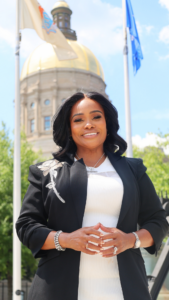
Patrice Lindo Wants Professionals to Stop Waiting to Be Chosen
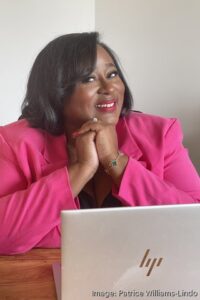
Patrice Lindo believes one of the biggest myths in professional development is that talent alone is enough.
The founder of Career Nomad has built a reputation helping professionals become more visible, position themselves for opportunities, and navigate a rapidly changing workforce. But according to Lindo, many talented people remain overlooked—not because they lack ability, but because they have never learned how to translate their value.
“True visibility isn’t about being louder,” Lindo said. “It’s about being legible. It’s about making sure the proof of your capability is positioned where decision-makers can actually find it, trust it, and act on it.”
That philosophy is at the heart of her work and the inspiration behind the Built Different Conference, a workforce readiness event designed to help professionals and organizations prepare for a future increasingly shaped by artificial intelligence and changing economic realities.
The Power of Changing Your Story
For Lindo, career growth often begins with reexamining the narratives people tell themselves.
She believes many professionals are operating from stories that were handed to them by family expectations, institutions, or societal norms rather than stories they intentionally created for themselves.
“Most professionals are living inside a narrative they inherited, not one they chose,” she said.
Instead of focusing solely on job titles or résumés, Lindo encourages people to focus on impact, outcomes, and evidence. She challenges professionals to identify the patterns, strengths, and accomplishments that have consistently appeared throughout their careers and use those experiences as the foundation for their next chapter.
“Don’t start with rebranding,” she said. “Start with the evidence.”
AI Isn’t Replacing People—It’s Repricing Them
One of the central themes of Lindo’s work today is helping people understand artificial intelligence beyond the fear-based headlines.
While many conversations focus on whether AI will replace jobs, Lindo argues that a more important question is how AI is changing the value of skills in the marketplace.
“We’re obsessed with replacement,” she said. “But the real conversation should be about repricing.”
According to Lindo, AI is not eliminating human capability. Instead, it is reshaping which skills are rewarded, how expertise is evaluated, and who gets access to opportunities.
She also warns that conversations about AI bias deserve greater attention. As more organizations rely on automated systems for hiring and decision-making, she believes representation within the development of those systems is critical.
“If we’re not in the rooms where these tools are being built, we’re being sorted by systems we didn’t design and don’t control,” she said.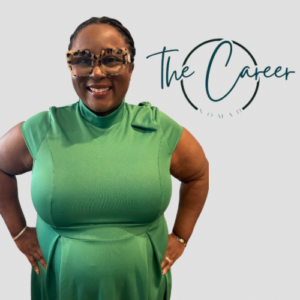
Why Successful People Stay Ready
After years of working with executives, entrepreneurs, and professionals across industries, Lindo has noticed a common trait among high achievers.
It isn’t confidence.
It isn’t networking.
And it isn’t luck.
It’s a willingness to embrace uncertainty.
“The people who are successful have a hunger for something different,” she said.
Rather than waiting for perfect circumstances, they move when opportunities appear, trust their instincts, and remain willing to evolve. They understand that growth often requires stepping beyond familiar environments and taking risks before the outcome is guaranteed.
Lindo credits much of her own success to paying attention to those instincts.
“You get a little signal,” she explained. “Don’t ignore it. Move on it.”
Protecting Peace While Building Success
Despite managing a demanding career, leading Career Nomad, and preparing large-scale events, Lindo emphasizes the importance of protecting her mental and emotional well-being.
One of the most important strategies, she says, is surrounding herself with people who hold her accountable.
Whether it’s a family member encouraging her to step away from work, take a walk, or prioritize self-care, she believes success is easier to sustain when people who genuinely care about you help maintain perspective.
She also starts every day with intentional reflection.
Each morning, she writes down five things she’s grateful for, five things she wants to accomplish that day, and five things she hopes to achieve in the future.
“Protect your time for thinking fiercely,” she said.
What It Means to Be Built Differentp
The conference’s title reflects a mindset Lindo believes many professionals need to embrace.
To her, being “Built Different” isn’t about standing out for attention. It’s about refusing to allow systems that were never designed with you in mind to define your value.
“Built Different means you stop trying to fit into a path that wasn’t designed for you,” she said. “And you start building the one that was.”
As the daughter of Jamaican immigrants, a former college student who left school before ultimately building a successful career, and a leader who has worked across multiple industries, Lindo understands firsthand that success is rarely linear.
That experience has become one of her greatest strengths.
“Your detour is not your disqualification,” she said. “It’s often your credential.”
Preparing for What’s Next 
Through Career Nomad and the Built Different Conference, Lindo hopes to equip professionals with practical tools to navigate workplace changes, identify their unique value, and position themselves for long-term success.
Her message is especially relevant at a time when technology, economic shifts, and workforce expectations continue to evolve at unprecedented speeds.
For Lindo, the goal is simple.
Help people stop waiting for permission.
Help them recognize the value they already possess.
And help them build careers that are prepared not only for today’s opportunities—but for tomorrow’s as well.