Thomas Ricks, #14: From SWAC All-American, to SWAT, to CEO of Executive Protection

Security has become increasingly complex, and few professionals can claim the unique blend of athletic discipline, law enforcement expertise, and entrepreneurial vision that defines Thomas Ricks. His journey from high school football fields to professional stadiums, and ultimately to the boardrooms and red carpets where he now protects some of the most recognizable names in sports and entertainment, represents more than just a career evolution—it’s a testament to the power of purpose-driven service and the enduring impact of true leadership.

“Thomas Ricks… is a guy who was raised in a household rooted in service, right, protection, values, with discipline,” he reflects on his foundation. This philosophy has guided every transition in his remarkable career, from SWAC legend to SWAT operator, from US Marshal to the co-founder of Bricks Enterprises, one of Atlanta’s premier security firms. His story illustrates how the principles learned in one arena can transform and elevate performance in entirely different fields, creating a legacy that extends far beyond any single accomplishment.

Within the HBCU community, Ricks is remembered not just as an exceptional athlete, but as a symbol of perseverance, dedication, and the transformative power of seizing opportunity when it finally arrives. His journey from patient backup to All-American quarterback serves as inspiration for countless young athletes who understand that success isn’t always immediate—sometimes it requires years of preparation, unwavering commitment, and the wisdom to recognize that every moment of struggle is preparation for greatness.

Rooted in Service: A Foundation of Integrity

The seeds of Ricks’s commitment to service were planted early in a household where integrity wasn’t just taught—it was lived daily. His father, a 22-year military veteran, provided a blueprint for principled leadership, while his mother’s 30-year career as a school teacher demonstrated the value of dedicated public service. “I had a duty to have integrity that was instilled in me at an early age,” Ricks explains. “I’ve always had a love for the uniform.”

This foundation became even more crucial when, at 18, Ricks faced a life-defining moment that would accelerate his maturity and sharpen his sense of purpose. In an NBC Sports interview during the 2004 Bayou Classic (Southern University vs. Grambling State University) game, he reflected on this pivotal time: “I have a four-year-old son and you know when he was born I had to grow up fast. And, just staying in school and practicing every day…  so he can have a better future, it’s just been my inspiration so you know I just think that’s my motive that drives me and keeps me in the game.”

This early responsibility didn’t derail his ambitions—it refined them. The young father channeled the discipline and structure from his upbringing into achieving excellence both on the field and in life. The values that guided him during those formative years would later become the cornerstone of his approach to leadership in every arena he would enter. Whether commanding respect in a huddle, leading a SWAT team through dangerous operations, or building trust with high-profile clients, the lessons learned from balancing fatherhood with athletic aspirations created a foundation of maturity that set him apart from his peers.

“You got to have your reasons why,” he emphasizes, describing how his son became both his anchor and his motivation. Rather than viewing teenage fatherhood as an obstacle, Ricks transformed it into fuel for his drive to succeed at the highest levels. This perspective—seeing challenges as opportunities for growth rather than barriers to success—would become a defining characteristic throughout his diverse career.

The values instilled by his parents created an internal compass that guided his decisions even in environments where young athletes often lose their way. “If I thought of something, or thought to do something that would disappoint him or make him look at me sideways, then I would reconsider,” he says of his father’s influence. This moral framework would prove invaluable as he navigated the pressures of college and professional sports, later serving as the ethical foundation for his work in law enforcement and private security.

The discipline required to excel academically while managing the demands of Division I athletics and early fatherhood created a work ethic that would distinguish Ricks throughout his career. His ability to compartmentalize responsibilities, maintain focus under pressure, and consistently perform at high levels regardless of external circumstances became hallmarks of his professional approach in every field he would later enter.

The All-American Quarterback: A Legend in the Making

“I just wish he would have had more time… he is the epitome of ‘I stuck with the program and when they finally gave me my opportunity’ he made the absolute best out of it. Everything you saw was out of one year of his body of work,” reflects Perry White (On The Yard Network, Youtube) in the Off Script Channel’s video “SWAC RUMBLE: Who’s the REAL Legend? Ricks, Hymes, Luke or Carrie?!” This sentiment captures the essence of Thomas Ricks’s collegiate legacy—not just as an exceptional athlete, but as a testament to the power of perseverance and the impact one can make when preparation meets opportunity.

At Southern University, Ricks transformed from a promising recruit into one of the most dynamic quarterbacks in the Southwestern Athletic Conference (SWAC), becoming what many consider a true legend within the HBCU community. His journey to becoming the conference’s Offensive Player of the Year in 2004 wasn’t a straight path—it was a masterclass in patience, preparation, and the kind of leadership that transcends traditional metrics.

Initially recruited as a quarterback, Ricks spent his first two collegiate years playing safety, demonstrating the versatility and team-first mentality that would become his trademark. “In college, my first year, I was brought in as a quarterback… my freshman year and sophomore year, I played safety, like, I was a strong safety, and then transitioned back to quarterback my junior and senior year,” he recalls. This positional flexibility taught him to see the game from multiple perspectives—a skill that would later prove invaluable in his security career, where understanding different viewpoints and anticipating various scenarios are crucial for success.

What made Ricks’s eventual success even more remarkable was the respect he commanded from his teammates despite his unconventional path to the starting position. As noted in the SWAC RUMBLE discussion, “The respect factor that he gets from his teammates is incredible. As a fifth year senior he’s never started… they elected him captain.” This extraordinary vote of confidence speaks to the character and leadership qualities that his teammates recognized long before the wider world would witness his on-field brilliance.

When Ricks finally claimed the starting quarterback position for his senior season, he didn’t just succeed—he dominated in a way that redefined what was possible. The 2004 season marked his crowning achievement, as he led Southern University to the SWAC Championship Game for a second consecutive year while earning All-American honors. His dual-threat performance that season was nothing short of spectacular: 2,786 passing yards with 24 touchdowns through the air, while simultaneously leading the team in rushing with 694 yards and 9 additional touchdowns on the ground. Highlight Reel:

These numbers tell only part of the story. What made Ricks truly exceptional was his ability to elevate everyone around him. His leadership style—patient, inclusive, and built on mutual respect—created a team dynamic that maximized the potential of every player. Teammates who had watched him wait his turn, contribute wherever needed, and maintain unwavering dedication to the program’s success, responded with fierce loyalty and elevated performance.

“I’ve always been that, been that guy, to be able to, you know what I’m saying, put myself in a position to make it work,” he reflects on his ability to adapt and excel in changing circumstances. This philosophy—making the most of every opportunity while preparing for the next one—became the foundation for his success not just in football, but in every subsequent career transition.

His college highlights showcase not just athletic ability but the mental toughness and strategic thinking that would define his later career. Whether scrambling out of the pocket to extend plays or making split-second decisions under pressure, Ricks demonstrated the composure and quick thinking that would serve him well in high-stakes security situations. Beyond football, he was also a dual-sport athlete, competing in track and field, which further developed his physical conditioning, competitive drive, and understanding of individual excellence within team frameworks.

Ricks earned his Bachelor’s degree in Therapeutic Recreation and Leisure Studies from Southern University, demonstrating his commitment to both athletic and academic excellence. This educational foundation, combined with his athletic achievements, created a well-rounded profile that would serve him throughout his diverse career. Later, recognizing the importance of business acumen in his evolving professional journey, he earned his Master of Business Administration from Columbia Southern University in March 2019, bringing strategic insight to complement his operational expertise.

Following his collegiate success, Ricks continued his football career professionally, playing in Arena Football 2 with the Alabama Steeldogs and the Albany Conquest, and later in the Austrian Football League with the Graz Giants. These experiences broadened his perspective and reinforced his ability to adapt to new environments, different playing styles, and diverse team cultures—skills that would prove essential as he transitioned into entirely different career fields. The international experience, in particular, taught him to communicate effectively across cultural barriers and adapt his leadership style to different contexts, abilities that would later distinguish him in the global security industry.

The Evolution of a Protector: From the Field to the Force

Ricks during his time as a U.S. Marshal

Ricks’s introduction to security began unconventionally—as an 18-year-old bouncer in Baton Rouge clubs while pursuing his college football career. “Not knowing what I was doing, but I was there. I had muscles, a stature, and I can handle myself,” he recalls with characteristic humility. This early exposure to security work planted the entrepreneurial seeds that would later flourish, while also providing him with ground-level understanding of crowd dynamics, conflict de-escalation, and the importance of projecting calm authority in volatile situations.

His athletic prowess led him from college All-American honors to professional football, but the call to serve in a different capacity grew stronger as his son got older. The same leadership qualities that made him a team captain and the patience that defined his college career informed his decision-making as his priorities evolved. After retiring from professional sports in 2008, Ricks made a deliberate choice to prioritize fatherhood and explore new avenues for service. “The only reason I did retire from pro ball… is because I was a early… teenage father, and my son was getting older, and Daddy was away all the time,” he explains. “I retired, went home, stabilized my home, and became a father to my son.”

This decision, like his patient approach to earning the starting quarterback position, demonstrated his ability to see beyond immediate gratification toward longer-term goals and responsibilities. The leadership lessons learned from waiting his turn, supporting teammates, and maximizing limited opportunities directly translated to his approach as both a father and a future law enforcement professional.

The transition into law enforcement wasn’t just a career change—it was a natural evolution of his service-oriented mindset and leadership abilities. Ricks didn’t simply join the force—he excelled rapidly, serving in key leadership roles with the United States Marshals Service and rising to Lieutenant in Special Operations with the St. John Parish Sheriff’s Office. His diverse experience investigating “murders, rapes, robberies, just any type of different heinous crime” provided him with a comprehensive understanding of threat assessment and crisis management that would prove invaluable in his later career.

The same qualities that made him an effective team captain—calm under pressure, ability to read situations quickly, and natural command of respect—translated seamlessly to law enforcement. His approach to building team cohesion, developed through years of bringing together diverse personalities in athletic settings, proved invaluable when leading tactical units where trust and coordination can mean the difference between life and death.

His commitment to excellence in law enforcement led him to pursue elite-level training at the Foreign Affairs Security Training Center (FASTC), where he mastered essential security skills typically reserved for federal agents operating in high-threat international environments. This advanced training encompassed surveillance detection, emergency medical response, IED recognition, advanced firearms proficiency, and defensive driving maneuvers. He also completed the Protective Service Operations Training Program (PSOTP), gaining specialized instruction in protecting high-profile individuals and dignitaries against criminal and terrorist threats, including hands-on experience in motorcade operations and comprehensive mission planning.

The discipline required for this elite training mirrored the dedication that characterized his athletic career—long hours of preparation, attention to detail, and the understanding that excellence comes from mastering fundamentals while continuously pushing personal limits. The strategic thinking developed through years of reading defenses and anticipating opponent moves translated directly to threat assessment and tactical planning.

The transition from law enforcement to private security wasn’t just about changing employers—it represented an evolution in how Ricks viewed protection. He draws a critical distinction between reactive and proactive security approaches: “That’s the difference between executive protection and a bodyguard… But how do you avoid that? So that’s part of being a professional.”

This philosophy emphasizes prevention over reaction, planning over improvisation—principles that echo his approach to football, where success came from extensive preparation and anticipating various scenarios. “You always go into things with a plan. You need to know certain information in order to construct this plan,” he explains. His approach involves comprehensive advance work: knowing exit routes, hospital locations, police response times, and venue security protocols before clients even arrive. This meticulous preparation transforms potential chaos into controlled environments where clients can focus on their objectives while feeling completely secure.

Bricks Enterprises: A New Chapter in Security Excellence

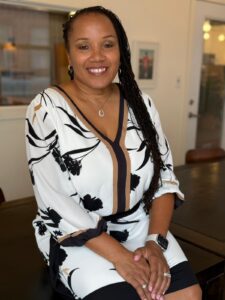
Tatiana Brown and Thomas Ricks, Co-Founders, Bricks Enterprises

The founding of Bricks Enterprises represents the culmination of Ricks’s diverse experiences and his partnership with Tatiana Brown, whose military background and extensive human resources expertise complement his operational skills. The company name itself tells a story of collaboration and remembrance—combining their surnames (Brown and Ricks) while honoring her late husband, Naim Brown, who passed away in a car accident.

“She has an extensive background. She’s former military and an extensive background in human resources combined with my background, so it’s a power team,” Ricks explains. This partnership creates a full-service security firm that offers executive protection, commercial and residential security, large-scale event management, and private investigations—all delivered with what Ricks describes as “proactive, professional, and high-impact security solutions for clients across industries.”

The leadership principles that made Ricks a respected team captain—building trust through consistency, leading by example, and maintaining high standards—form the foundation of Bricks Enterprises’ company culture. Just as he elevated his teammates’ performance through his approach to preparation and professionalism, Ricks has built an organization where every team member understands that their individual excellence contributes to collective success.

What sets Bricks Enterprises apart in a crowded field is their client-centric philosophy, rooted in the relationship-building skills Ricks developed throughout his athletic and law enforcement careers. “It’s definitely a relationship driven world,” Ricks notes. “If your client, or the person that you’re dealing with does not feel safe, then you’re spinning your wheels and you’re making no progress.” This understanding goes beyond physical security to encompass the psychological comfort that allows clients to function normally in potentially threatening environments.

The firm’s evolution reflects broader changes in the security industry, particularly the integration of physical and digital protection. Ricks’s cybersecurity training, developed during his time protecting high-profile officials, adds another layer of comprehensive security. “I don’t know if this is a trend now in the industry, but it just makes so much sense to pair your physical and your cyber security,” he observes. This holistic approach recognizes that modern threats often begin in digital spaces before manifesting in physical confrontations.

Ricks on assignment: NBA star Anthony Davis (left), and WNBA star Brittney Griner (right)

Bricks Enterprises has established itself by securing major events including the Super Bowl and BET Awards, and providing ongoing protection for WNBA teams. Each engagement requires customized security plans that consider the specific venue, client needs, and potential threat vectors. “You got to know, again, from the very beginning what your resources are, first of all, and then, second of all, what are the possible threats? How do you mitigate those threats?” Ricks explains.

The same analytical approach that made him an effective quarterback—studying opponent tendencies, identifying weaknesses, and developing multiple contingency plans—now drives his security planning process. Clients benefit from the strategic mindset of someone who spent years making split-second decisions under pressure while maintaining awareness of constantly changing dynamics.

The Mind of a Leader: Presence, Planning, and Poise

Ricks (left) and his team during his time as Assistant Chief of the protection detail for Atlanta Fulton County District Attorney Fani Willis (center).

Central to Ricks’s philosophy is his approach to leadership under pressure, shaped by experiences where life-and-death decisions had to be made instantaneously. The same composure that allowed him to perform as a team captain despite never having started, and later to excel in high-stakes law enforcement situations, now defines his approach to executive protection.

“There’s really no pressure more than having to decide to pull the trigger or not pull the trigger,” he reflects, drawing from his law enforcement background. This perspective provides context for his calm approach to high-stakes security situations. The pressure of performing in front of 50,000 screaming fans, or the weight of making tactical decisions that could save or cost lives, creates a foundation that makes most business-world challenges manageable by comparison.

“Pressure is only felt when you acknowledge it,” he states with the confidence of someone who has faced genuine pressure and emerged stronger. His method for managing stress involves thorough preparation and staying within his area of expertise—principles learned through years of athletic competition and honed through law enforcement training. “Focus on what you can focus on, handle what you can handle. And you know, do it to the best of your ability.”

The importance of professional presence cannot be understated in Ricks’s approach. He believes that proper bearing and confident demeanor often prevent situations from escalating. “A lot of times it’s the way you carry yourself, the presence that you hold. If you walking around looking clumsy, then somebody most likely will try you,” he explains. This principle extends beyond physical intimidation to encompass the professionalism that builds client confidence and deters potential threats.

His commitment to excellence in presentation mirrors his approach to uniform standards from his football and law enforcement days. “You won’t find me coming to work wrinkled. You won’t find me coming to work unprepared. I’ve always been that guy or that asset to make sure that I’m always thinking of things that people don’t normally think about.”

This attention to detail, developed through years of athletic preparation and reinforced through law enforcement training, creates the foundation for the level of service that sets Bricks Enterprises apart. Clients recognize when someone has prepared thoroughly, just as teammates could always tell when Ricks had done his homework on opponent tendencies or tactical situations.

A Legacy of Service and Protection

Bricks Enterprises – click to visit bricksenterprises.com

Thomas Ricks’s journey from patient backup to SWAC legend, from team captain to SWAT leader, from federal agent to successful entrepreneur, demonstrates how foundational values can guide radical career transitions while maintaining core identity. His evolution through professional sports, law enforcement, and entrepreneurship hasn’t been about abandoning previous chapters but rather about building upon each experience to create something greater.

The thread connecting every phase of his career is service—whether to teammates, communities, or clients. His approach to security reflects the same principles that made him successful as an athlete: preparation, discipline, teamwork, and an unwavering commitment to excellence. These qualities, combined with his law enforcement expertise and business acumen, have positioned Bricks Enterprises as a leader in an increasingly competitive industry.

The respect he earned from teammates who elected him captain despite his unique path to the starting position mirrors the trust he now builds with clients who rely on his expertise in life-or-death situations. The patience and dedication that defined his college career—sticking with the program and making the most of his opportunity—continues to guide his approach to building lasting business relationships and developing comprehensive security solutions.

Perhaps most telling is Ricks’s approach to family, which extends beyond blood relations to encompass his broader community of responsibility. When DNA tests revealed that a child he had been supporting wasn’t biologically his, his response exemplified the values that define him: “Blood don’t make family. So I’m Daddy.” This commitment to responsibility regardless of personal cost illuminates the character that clients trust with their safety and that has driven his success across multiple careers.

The legacy Ricks has built extends beyond individual accomplishments to encompass the example he sets for others facing their own moments of transition and opportunity. His story resonates particularly within the HBCU community, where his journey from patient backup to All-American serves as inspiration for young athletes learning that success often requires faith in the process, dedication to continuous improvement, and readiness to excel when opportunity finally arrives.

Today, as Ricks continues to build Bricks Enterprises while maintaining the highest standards of professional security service, his story serves as an inspiration for anyone seeking to transform their experiences into meaningful service to others. His journey proves that with the right foundation, clear purpose, and unwavering commitment to excellence, it’s possible to excel in entirely different fields while staying true to core values of integrity, service, and protection.

From the SWAC fields where he first demonstrated his leadership potential to the boardrooms and event venues where he now ensures client safety, Thomas Ricks has consistently proven that true legends aren’t just made by individual achievement—they’re defined by their ability to elevate others, adapt to new challenges, and maintain excellence across diverse arenas of service. His legacy continues to grow, not just through business success, but through the example he sets for the next generation of leaders who understand that greatness often comes to those who prepare faithfully and perform excellently when their moment finally arrives.

The Biggest Family Reunion in Illinois: Mike Page’s Love Revolution

Mike Page, Founder LOTL

Success often leads people away from their roots, Mike Page chose a different path. The music industry entrepreneur and founder of the Mike Page Foundation made a decision that defies conventional wisdom: he invested his time, money, and passion back into his hometown of Elgin, Illinois. Through his annual “Love on the Lawn” festival, Page has transformed a simple community event into what some are calling “the biggest family reunion in Illinois.” But this isn’t just a story about a festival—it’s about a man whose commitment to community runs as deep as his grandmother’s unwavering love, and whose vision extends far beyond a single weekend of music and celebration.

The Roots of Philanthropy: Grandma’s Legacy

To understand Mike Page’s relentless drive to give back, you have to understand the woman who shaped him. Page speaks of his grandmother with a reverence typically reserved for saints, calling her “Elgin’s community grandmother.” When his mother went to prison, it was his grandmother who stepped in, raising him and his sisters with an iron will wrapped in boundless love.

“That’s why I’m prepared. That’s why, really, nothing can affect me or break me. Because she really got me prepared for it all,” Page reflects, his voice carrying the weight of deep gratitude. His grandmother didn’t just provide shelter—she instilled in him the discipline, faith, and work ethic that would become the cornerstone of his character. Through her example of tireless community service, she planted seeds that would bloom decades later in the form of his foundation and festival.

But perhaps most telling is Page’s humble assessment of his own philanthropic efforts: “I’m just trying to catch up to my grandma. I’m at like, 10% of what she did.” This isn’t false modesty—it’s the perspective of a man who witnessed true community leadership up close and understands the magnitude of impact one person can have when they dedicate themselves to others. His grandmother’s legacy isn’t just personal; it’s the blueprint for everything Page does today.

From Milwaukee to the Mic: A Journey of Inspiration

Page’s journey from a “rough upbringing” in Milwaukee and Elgin to success in the music industry reads like a testament to resilience. But for Page, his personal story isn’t about celebrating his own achievements—it’s about showing others what’s possible. He carries the weight of representation, knowing that young people in his hometown are watching, wondering if success is attainable for someone like them.

“I hope they can see that it’s possible without having a father in your life… you can still make it out when you just got good people around you, good family,” Page explains. His words carry particular power because they’re backed by lived experience. He understands the challenges that come with growing up without certain advantages, and he’s living proof that those challenges don’t have to define your destiny.

Page’s philosophy is refreshingly straightforward: lead by example. “Just lead by example… by showing them, bringing things to my town, and showing them, yeah, I’m from here, and I did this, and you can do it, too,” he says. It’s a philosophy rooted in the belief that inspiration is more powerful than instruction, that showing up consistently in your community speaks louder than any speech about overcoming adversity.

For Page, every success is measured not just by personal gain, but by its potential to inspire someone else to make what he calls “righteous” choices at life’s inevitable “fork in the road.” His journey from difficult circumstances to industry success becomes a roadmap for others, proof that with the right people around you and unwavering determination, transformation is possible.

Love on the Lawn: More Than a Festival

The Origin Story

The “Love on the Lawn” festival didn’t emerge from a boardroom or marketing strategy—it was born from nostalgia and necessity. Page remembers a different Elgin from his childhood, one where community bonds were stronger and love was more tangible. The festival represents his attempt to recreate that atmosphere, to bring back the sense of unity and connection he witnessed in his grandmother’s work.

“Love on the Lawn” is Page’s answer to a question many communities are asking: How do you rebuild genuine connection in an increasingly disconnected world? His answer is deceptively simple—you create a space where love is the leading value, where families can gather without fear, and where the community can see itself reflected in something beautiful.

A Leap of Faith

The festival’s growth story reads like a case study in the power of authentic intention. In its first year, Page charged admission and drew 550 attendees. But something magical happened when he stepped back and observed his creation: “when I stepped back and looked at it… I knew right then, like, Man, we got something beautiful… even when it was only 500 people out there. Man, I could feel it, the energy.”

That energy convinced him to make a bold decision for the second year—eliminate the admission fee. The result was immediate and dramatic: attendance jumped to 3,000 people. By the third year, 5,400 people were gathering on the lawn, transforming Page’s vision into one of Illinois’s most significant community events.

But this growth came at a significant personal cost. Page admits, “I lost probably, like, $30,000” in the early years. Yet his motivation transcended financial considerations: “I didn’t really expect them to give us nothing. I really wanted to do this out of our own system, showed our people what we could do.” This wasn’t just about organizing an event—it was about proving to his community that they could create something extraordinary without waiting for outside validation or support.

The Elgin Identity

One of the festival’s most significant achievements has been helping Elgin establish its own identity while maintaining its connection to nearby Chicago. Page observes that Elgin residents are “trying to be their own thing, because they would have said they was a suburb of Chicago.” The festival has become a bridge between these two identities, bringing national and international talent like DJ Kid Capri and Lenny Williams, along with performers like comedian Tierra, to Elgin while celebrating what makes the community unique.

The strategic location of the festival—just a two-minute walk from the Elgin National commuter rail station—makes it accessible to Chicago residents while firmly planting the event in Elgin soil. This geographical positioning mirrors Page’s philosophical approach: honoring connections while celebrating independence.

The festival features local vendors and includes a free kids’ zone, ensuring that community members aren’t just spectators but active participants in their own celebration. This approach transforms “Love on the Lawn” from entertainment into empowerment, from consumption into community building.

Click the flyer to join Illinois’s biggest family reunion!

This year’s 4th annual festival, taking place on August 30th at Festival Park in Elgin from 2-10 PM, promises to be the biggest yet. The lineup features legendary DJ Kid Capri as the headliner, alongside an impressive roster of DJs including Rod Boogie, Slugo, Khaaliq, Sundance, and CZR. The event also features a special performance by soul legend Lenny Williams, with comedian Tierra returning as host, bringing what the festival describes as “the love and the laughs.” The event now offers premium experiences including a Platinum VIP Lounge with tent seating for 12, complete with drinks, VIP bar service, exclusive bathroom access, and VIP parking—a far cry from the grassroots gathering that started with 550 people just four years ago.

Don’t miss your chance to be part of Illinois’s biggest family reunion. Tickets for Love on the Lawn 2025 are available now at LOTLfest.com. Join thousands of others on August 30th at Festival Park (132 S Grove Ave, Elgin, IL) and experience firsthand the love revolution that Mike Page has created. This is more than a festival—it’s a celebration of community, connection, and the power of coming together.

A Vibe of Love

Perhaps the most remarkable statistic about “Love on the Lawn” isn’t its attendance numbers—it’s what hasn’t happened. “It’s like we haven’t had one argument or fight at our event in… four years,” Page proudly shares. “because I think we lead with love, and they know what they coming out there for.”

In an era when large gatherings often require extensive security and still experience incidents, this track record is extraordinary. It speaks to the power of intentional culture creation, of leading with clear values and maintaining them consistently. The festival’s family-friendly atmosphere isn’t accidental—it’s the direct result of Page’s commitment to creating a space where love is the operating principle.

The Future: A Funnel of Success

Festival Expansion

Page’s vision for “Love on the Lawn” extends far beyond Elgin’s borders. His ultimate dream is to expand the festival into a two-day event locally while simultaneously bringing the concept to other cities that could benefit from its message. Minneapolis and Atlanta top his list of potential expansion cities, communities he sees as needing the same infusion of love and unity that has transformed his own hometown.

This expansion isn’t about franchise building—it’s about replication of impact. Page has created a model for community healing and empowerment, and he recognizes that other communities could benefit from adapting his approach to their unique circumstances.

Building a Legacy

Beyond the festival, Page envisions the Mike Page Foundation as a comprehensive support system for youth development. His plan includes a “funneling program” that would guide young people from Pop Warner football through college, using both sports and music as vehicles for growth and opportunity.

One of his most inspiring ideas involves creating a Hall of Fame wall at a local field in Elgin, showcasing the achievements of community members who have succeeded in various fields. “I want them to see, you know, if you see it it’s possible, so, I want to bring more (examples) of that,” Page explains. This isn’t just about celebration—it’s about making success visible and attainable for young people who might otherwise believe their circumstances limit their possibilities.

The Hall of Fame concept reflects Page’s deep understanding of the psychology of inspiration. By highlighting local success stories, he’s creating a bridge between dreams and reality, showing young people that success doesn’t require leaving your community behind—it can mean coming back to lift others up.

Conclusion

Mike Page’s story challenges conventional definitions of success. While many measure achievement by how far you travel from your starting point, Page has found his greatest triumph in the decision to return home and invest in the community that shaped him. Through “Love on the Lawn” and the Mike Page Foundation, he has demonstrated that with love, discipline, and hard work, it’s possible to transform not just individual lives but entire communities.

His work represents more than event planning or youth programming—it’s about planting seeds of hope in soil that others might have written off as barren. Page’s commitment to his grandmother’s legacy, his community’s potential, and his own values has created something that transcends entertainment: a movement based on the radical idea that love, when consistently applied, can change everything.

As the festival continues to grow and the foundation expands its reach, Page remains focused on the fundamental truth his grandmother taught him: real success isn’t measured by what you achieve for yourself, but by what you make possible for others. In a world often defined by division and disconnection, Mike Page is proving that community, commitment, and love remain the most powerful forces for positive change.

Click to visit LOTLFest.com

Be Bold, Be Bright: Derek Amarillas’ Debut Book “Socko” Teaches Kids the Power of Showing Up as Themselves

From boardrooms to bookstores, Derek Amarillas is redefining what it means to take risks and live boldly. The former finance executive has stepped into the literary world with Socko, a heartwarming children’s picture book that celebrates individuality, resilience, and the freedom to be unapologetically yourself.

Inspired by his own childhood experiences of feeling “too much” and often misunderstood, Derek created Socko—a flamingo who proudly wears tennis shoes and just wants to dance. But Socko isn’t just a character; he’s a symbol of courage, self-expression, and the inner artist that lives in all of us.

“Growing up, I had to carve space for myself in rooms that didn’t feel built for me,” Derek shares. “Socko represents the part of me that insists on showing up boldly, even when the world says, ‘tone it down.’”

Originally written as a gift for his mother-in-law, the story quickly evolved into something more powerful after a close friend read it during a difficult time. Her emotional response lit a creative fire in Derek, leading him to publish Socko and share it with the world.

But it wasn’t without doubt. “Imposter syndrome is real,” Derek admits. “There were moments I questioned if I was good enough. But I realized creativity, for me, has always been about survival. It’s how I’ve adapted and made sense of the world.”

What makes Socko even more personal is the intentional symbolism packed into every detail—from the flamingo’s flair to the bold sneakers, inspired by Derek’s husband’s love of statement footwear. “Your look is your legend,” he says. “Tell it with pride.”

Beyond the pages, Derek is committed to uplifting young readers through school partnerships and community programs. He’s especially excited about upcoming collaborations with ASL programs, where the story will be shared through sign language to reach even more children in inclusive and accessible ways.

“Socko the Flamingo with Tennis Shoes,” written by Derek Amarillas
Available now on Amazon: https://www.amazon.com/dp/B0FJWVX7TM

“The feedback I’ve received—especially from kids and parents who find pieces of themselves in Socko—has been overwhelming,” he reflects. “It reminds me why I do this.”

So what’s next for Derek Amarillas? With a vault of creative stories already written and a renewed sense of purpose guiding him, he’s just getting started.

You can purchase Socko the Flamingo with Tennis Shoes—published by Palmetto Publishing on July 29, 2025—on Amazon here:
https://www.amazon.com/dp/B0FJWVX7TM

One thing’s for sure: in a world that often tells us to dim our light, Socko teaches kids—and adults—to lace up their sneakers, stand tall, and dance anyway.

From Lab to Legacy: How Dr. Isfahan is Redefining Black Hair Care Through Science

Dr. Isfahan, Founder

When Dr. Isfahan first experienced intense scalp irritation and thinning hair from years of chemical straightening, she didn’t just look for a quick fix—she looked deeper. At the time, she was a biomedical scientist conducting clinical autoimmune research at Vanderbilt University, studying diseases like sarcoidosis that disproportionately affect Black women. As she witnessed firsthand how poorly understood conditions impacted her community, a thought struck her: Could the products we use every day be silently harming us?

That question led to the birth of Alodia, a science-driven hair care brand grounded in clinical research and cultural understanding.


The Science of Self-Care

A graduate of Morehouse School of Medicine and a self-described chemistry lover, Dr. Isfahan merged her personal experiences with her scientific background to build products that are both effective and safe. What began as an effort to heal her own scalp evolved into a movement to elevate Black hair care with ingredients that nourish at the cellular level.

Unlike traditional products that often rely solely on oils or cosmetic ingredients, Alodia incorporates bioactive compounds—think niacinamide and peptides—that stimulate growth, balance the scalp microbiome, and reduce shedding. “These ingredients aren’t just surface level,” Dr. Isfahan explains. “They work at the molecular level to improve scalp and hair health in ways many brands simply don’t offer.”

Breaking Down the Myths

From the beginning, Dr. Isfahan noticed a dangerous trend: mainstream and even some “natural” hair products were not created with the specific needs of textured hair in mind. Many were packed with protein, leading to breakage, or they relied on harmful chemicals under the assumption that Black women were less concerned about innovation or science.

“One myth I hear all the time is that Black hair doesn’t grow,” she says. “Another is that we don’t care about ingredient quality or packaging. That couldn’t be further from the truth.”

Alodia aims to dispel these myths not just through products, but through education.

Building Community, Not Just a Brand

Before stepping into retail spaces like Target and CVS, Alodia spent years cultivating community. “We didn’t have venture capital or outside funding in the beginning,” Dr. Isfahan shares. “We had to be intentional.” That intentionality showed up in pop-ups, farmers markets, and a thriving Facebook group where thousands of women connect, ask questions, and receive science-backed education about hair and scalp health.

As a founder who comes from a working-class Brooklyn background, Dr. Isfahan is now paying it forward. She’s building a STEM pipeline initiative in partnership with Morehouse School of Medicine to expose young students—especially Black and Brown youth—to careers in science and medicine. “STEM changed my life,” she says. “It showed me the world beyond my block.”

What’s Next: Aging Beautifully & Expanding Impact

Alodia isn’t chasing trends—it’s solving problems. From the current Scalp Therapy line to its best-selling Length Retention products, each formula targets specific concerns with clinical precision.

The next launch? Aging Beautifully,  a line designed for women 40+ who experience hair thinning and brittleness as they age. “We don’t talk about aging in Black hair care enough,” says Dr. Isfahan. “This line is about embracing change while nourishing the scalp through it.”

She’s also exploring holistic wellness offerings—retreats, stress-reduction workshops, and fitness integration—because as she explains, “hair health is full-body health.”

A New Standard for Black Beauty

Alodia products

For Dr. Isfahan, this is bigger than business. It’s about rewriting the script of what Black beauty looks like, feels like, and deserves. Her approach is rooted in transparency, empowerment, and education—not gimmicks.

“I’ll never promise that our oil can fix scarring alopecia,” she says. “We’re not here to sell dreams. We’re here to support real health.”

And that’s exactly what she’s doing—one scalp, one strand, and one science-based solution at a time.


Wrapped in Rest: How The Rest Spot Holds Space for Black Women to Heal

Jena Burgess, Founder

In a world where “doing it all” is worn like a badge of honor and burnout is often normalized, The Rest Spot in Smyrna, Georgia, is a radical act of softness. It’s more than a wellness space—it’s a sanctuary where Black and Brown women are encouraged to slow down, release the pressure, and simply rest.

I had the opportunity to speak with Cat McPhaul, the Community Evangelist at The Rest Spot, and from the very first moment, it was clear: this place is different. Designed with intention and community at its core, The Rest Spot is redefining what healing looks and feels like.

A Space Built for Stillness

“What makes The Rest Spot different?” I asked.

“We are solely focused on rest,” Cat answered effortlessly. “There are co-working spaces, spas, wellness retreats—but no one is creating dedicated environments for rest alone. We do.”

And rest, here, is sacred. From private suites and cozy fire pits to soft blankets and quiet lounges, every part of The Rest Spot is designed to help women disconnect from the noise of everyday life. Whether you want to nap, read, sit in silence, or just be—this is the place to do it without guilt or expectation.

Sometimes, members even need a little “gentle nudge.”

“Women come in and just work, work, work—even here,” Cat laughed. “So we remind them, ‘You’ve got four more rest sessions this month—when are you going to actually rest?’”

A Village, Not a Venue

Community isn’t an afterthought—it’s part of the mission. Every Thursday, The Rest Spot hosts Social Hour: a members-only, wine-and-vibe-style gathering where women connect like cousins around the kitchen table. There’s no pressure to perform, no hard networking—just authentic conversations over food and laughter.

But the connections don’t stop there.

“We get to know our members deeply,” Cat explained. “We ask about their work, their kids, their passions. So when someone needs a chiropractor or a designer, we can say—‘Oh, you should meet her.’ It happens organically.”

Whether you’re a mompreneur, a corporate leader, or somewhere in between, this is a place where your needs are heard and met—with softness.

Intentional Design, Deep Healing

Every room at The Rest Spot is built with purpose.

The Sensory Suite feels like a cabin escape, complete with its own screened patio and calming ambiance. The Creative Suite is a sunny, open space for vision boards, writing, painting—or simply sitting with a warm cup of tea.

The co-working café allows for productivity without pressure. But the Rest Lounge is a sacred no-work zone. No calls, no meetings—just books, affirmation decks, coloring pages, velvet chairs, and soft, draped blankets. If someone dozes off, staff gently covers them with a blanket and lets them sleep. No judgment. No interruption.

Even first-time guests can feel the difference.

“We’ve had women cry on their first tour,” Cat shared. “Their bodies finally feel safe enough to let go.”

Programming that Heals from the Inside Out

CEO, JENA BURGESS

The Rest Spot hosts a range of healing-centered events—from yoga on the lawn to somatic workshops like “Embodied Rest.” Many events are led by community members themselves, deepening the collective bond.

One favorite is Embodied Rest, held monthly. “Women lie down, stretch, breathe, and reconnect with their bodies,” said Cat. “Afterward, we offer a nourishing snack, and you can just see the shift in their energy.”

Beyond events, the team integrates rest into workdays, team retreats, and even research meetings. Every visit includes the option for intentional grounding or breathwork. This isn’t wellness for show—it’s wellness that works.

Real Impact, Real Stories

Cat shared one story that stayed with her: a member with high blood pressure and mental health challenges began visiting several times a week. After months of intentional rest, her health metrics drastically improved.

“Her blood pressure leveled out. Her mental clarity returned. She just needed a space to rest and breathe,” Cat said.

Another member booked her rest sessions through December—pajamas and bonnet packed in advance. Because here, women are allowed to prepare for rest the way they prepare for hustle.

Intergenerational healing also unfolds naturally. Younger members are often mentored by seasoned women, exchanging career advice and life wisdom over wine or herbal tea.

Soft Boundaries That Protect Sacred Energy

Founder Jena’s vision for The Rest Spot was always clear: create a peaceful “rest village.” As the space grows, new rest suites, walking paths, and a pavilion will be added—but the close-knit, sacred vibe will remain.

Boundaries are also embedded in the space itself. Some areas are chat-friendly; others are strictly for disconnection. The design alone encourages regulation of the nervous system.

“The moment you walk through our doors, something shifts,” Cat said. “The calm is immediate.”

Even the 90-minute rest sessions are intentional. “It takes about 30 minutes for new visitors to regulate and fully let go. So we give them that time to decompress before they drop into deep rest,” she explained.

For Women Who Struggle to Slow Down

For women who feel guilty about resting or investing in themselves, Cat offers this gentle truth:

“Your body wants you to rest before it forces you to rest.”

She shares that The Rest Spot was birthed from that very need. Founder Jena had it all—high-powered corporate job, motherhood, and caregiving responsibilities—but her health collapsed. Her prescription? Ninety days of rest. What came next was her mission: to help other women rest before the burnout.

“There’s no shame in needing rest. In fact, we honor it here.”

Plan Your Visit

Location: 1951 Old Concord Rd, Smyrna, GA
Hours:
Monday–Friday: 9 a.m. – 6 p.m.
Saturday–Sunday: 12 p.m. – 6 p.m.

Follow The Rest Spot:
Instagram: @the_rest_spot
Facebook: The Rest Spot
LinkedIn: The Rest Spot

For women who hold the world on their shoulders, The Rest Spot is a reminder: you deserve a place to put it all down. Not later. Not when you earn it. Now.

Wrapped in rest, you’re not weak.
You’re finally whole.

The Power of Healing, Honesty, and Humanity: Inside the Heartwork of Dr. Eanah

Dr. Eanah

There are some people who don’t just change the conversation—they change the frequency. Dr. Eanah is one of those people. A psychologist by trade, creative by nature, and healer by divine assignment, she has built her life’s work around translating pain into purpose, research into relatable truth, and grief into generational restoration.

Her journey is one that moves beyond credentials—though she’s earned them all: a PhD, a long-standing military career in forensic and trauma psychology, and years of experience working with federal agents to decode the darkest corners of human behavior. But even after all of that, something in her spirit said: “This is not the end of your story.”

And so, she pivoted.

A Club for the Mind, a Sanctuary for the Soul

At the core of her work is Council Club, a digital and community platform that marries evidence-based psychology with cultural awareness, creativity, and compassion. It’s not therapy, but it’s educational. It’s not clinical, but it’s deeply transformational. Born from a need to make mental health accessible, real, and free from misinformation, Council Club is Dr. Eanah’s answer to a world oversaturated with “pop psychology” soundbites and undernourished in real tools.

“Everybody’s an expert online,” she notes with care, “but not everyone’s telling the truth. Council Club is about translating mental wellness into something people can actually use.”

More than a brand, it’s a movement. A bridge. A community space where you can explore spirituality, psychology, music, and wellness—all with the assurance that what you’re receiving is rooted in both experience and expertise

Grief as a Guide

Dr. Eanah’s depth is not performative—it is earned, scarred, and sacred. In 2012, she lost her daughter Deja, a grief no parent should have to carry. The ripple of that loss was profound—not only did she bury her child, but just days later, her grandmother also passed, a death Dr. Eanah believes was tied to a broken heart.

For years, she wore a mask. Compartmentalized. Performed healing without fully allowing herself to feel it.

“I was pretending well,” she admits. “But doing this documentary broke me open again.”

Her upcoming documentary, set for release in 2026, is a bold and beautiful archive of remembrance. Originally started as a check-in on how her family was doing ten years later, the project evolved into a deep dive on legacy, faith, and the many shades of loss. Through conversations

with friends, family, and spiritual leaders, she traces her own journey from silence to song, from questioning God to redefining what faith looks like in the aftermath of the unthinkable.

“I had a crisis of faith,” she says, “but it made me more spiritual. I’m still healing—and that’s okay.”

From Diagnosis to Dialogue

In an age where Instagram posts replace real mental health conversations, Dr. Eanah is a steady voice calling for nuance, truth, and care. She pushes back against the growing trend of casually diagnosing others (or ourselves) without context or clinical training.

“Everybody’s not a narcissist. Not everything is trauma. Some people are just… rude,” she says with a touch of wit, but also sincere urgency.

She encourages people to slow down, to stop rushing to label every experience, and instead, to focus on basic wellness: sunlight, food, boundaries, and music. “Sometimes the most revolutionary thing you can do is take care of the basics,” she affirms.

A Second Act, A New Song

At 45, Dr. Eanah is entering what she calls her “second act.” Newly retired from the military, newly divorced, and newly grounded in her purpose, she’s pouring her energy into music, motherhood, and meaningful connection.

Her song “Star,” written in honor of her daughter and featuring Grammy-nominated artist Mumu Fresh, wasn’t even meant to be released—but over 100,000 listens later, it’s become a beacon for others who are grieving. Now, she’s working on an evidence-based children’s album—one that blends neuroscience, healing, and sound.

This next chapter, she says, is hers. “The future feels promising. I’m excited again.”

A Final Word

Dr. Eanah doesn’t promise perfection. She doesn’t preach false positivity. What she offers is far more valuable: truth, tools, and testimony. She invites us not to bypass our pain, but to give it space to breathe—and then shape it into something worthy. Something useful. Something human.

In a world obsessed with quick fixes and curated highlight reels, Dr. Eanah is reminding us that real healing isn’t linear. It’s layered. It’s lived.

And most importantly—it’s possible.

Connect with Dr. Eanah
Instagram & TikTok: @Dr.Eanah
Website: www.dreanah.com
Council Club: www.councilclub.com


“Star” featuring Mumu Fresh is available on all platforms now.

A New Chapter of Advocacy: LaToya Dwight’s Fight for Fibroid Awareness

LaToya Dwight

There are moments in history when the right woman rises at the right time—rooted in truth, led by grace, and unwavering in her mission to bring others along. LaToya Dwight is that woman. A businesswoman, wife, mother, and survivor turned advocate, LaToya has emerged as a bold voice in the fight for menstrual equity and fibroid awareness, especially for Black women.

LaToya’s work is not about spotlight—it’s about service. It’s about standing at the intersections where silence and suffering have lived for too long and saying, “Not anymore.” Through her nonprofit, Pad the Pandemic Foundation, and her signature event, Run F.A.R. 5K + Sneaker Gala, she has created a platform that doesn’t just raise awareness—it raises the standard.

More Than a Run—It’s a Movement

The acronym F.A.R. stands for Fibroid Awareness and Resources, but the meaning goes deeper. It signals LaToya’s commitment to walking beside women on their healing journey, pushing them to go farther than pain, farther than fear, and straight into community, education, and empowerment.

This year’s Run F.A.R. event brings the mission into the heart of Atlanta with a more accessible paved course and a one-mile fun run for children. With every step taken, attendees honor the stories of women who have suffered in silence, often misdiagnosed or forced into unnecessary hysterectomies without being given safer, less invasive options.

A Truth Many Women Carry Quietly

LaToya’s advocacy is deeply personal. She was once the woman in the doctor’s office, blindsided by a fibroid diagnosis and given surgery as the only solution. “I took my pain and turned it into passion… I felt alone, I felt confused, I felt as though my body had betrayed me. Knowing that I had those feelings at that time, it encouraged me more to be able to tell my story so that I could potentially help the next woman who may possibly walk in my footsteps,” LaToya Dwight shared, reflecting on the moment that sparked her advocacy. She didn’t have a roadmap. No blueprint. Just questions, confusion, and a deep feeling that there had to be another way.

Instead of retreating, she rose.

And in her rise, she began illuminating the silent crisis that so many endure—prolonged menstrual cycles, anemia, and limited access to safe menstrual care. These are not just health issues; they are equity issues. And LaToya tackles them with the clarity, compassion, and courage of a woman who refuses to leave others behind.

Centering the Black Community

Black women are three times more likely to develop fibroids. That statistic is not just a number—it’s a call to action. Through health screenings, hygiene kit giveaways, and partnerships with organizations like Effect Fitness and medical professionals across Atlanta, LaToya is bridging the gap between what’s common and what’s actually normal.

She challenges the toxic “organic” branding that misleads consumers and promotes truly chemical-free menstrual products, helping women make informed, body-safe choices. Her efforts don’t stop at awareness—they prioritize early detection, education, and autonomy.

Boundaries, Balance & Becoming

Upcoming events flyer via Pad The Pandemic instagram

In a culture that celebrates the hustle, LaToya teaches the power of pause. She has mastered the art of saying “no” without guilt and “yes” with intention. Whether she’s planning major events, running a business, or raising a family, she does so with honesty, accountability, and boundaries that protect her peace.

And in that balance, she’s discovered something many of us strive for—a version of herself that’s not only surviving, but fully thriving.

A Legacy in Motion

LaToya Dwight doesn’t just advocate. She mobilizes. She empowers. She equips. Her work reminds us that change doesn’t always come from grand speeches or big stages—but often from the quiet strength of a woman who decides to turn her pain into power.

Through the Fibroid Pandemic Foundation and Run F.A.R., LaToya is building a legacy not just of awareness—but of action. And in doing so, she’s giving women everywhere permission to reclaim their health, their voices, and their wholeness.

To learn more or get involved:

Because healing is not a finish line—it’s a lifelong run. And thanks to women like LaToya Dwight, none of us have to run it alone.

Dr. Tanika Long: Building Bridges of Hope in Barnesville and Beyond

Dr. Tanika Long, CEO

Sometimes all it takes is one moment — one post, one realization — to change everything.

For Dr. Tanika Long, that moment came during the height of the pandemic.

Scrolling through Facebook, she saw a post celebrating Black history moments from her hometown, Barnesville, Georgia.

Right there, in black and white, was her name — the first and only African American woman from Barnesville to become a physician.

And it hit her: If I didn’t even know that about myself, how would the next little girl know what’s possible?

That spark lit a fire.

It wasn’t enough to have made it out — she had to come back, full circle, and show the next generation how to dream even bigger.

That’s how Full Circle of Hope was born.

More Than Just a Scholarship — It’s a Movement

Launched in 2022, Full Circle of Hope is Dr. Long’s love letter to the town that raised her — and her challenge to every child who’s ever been underestimated.

“We’re teaching kids that no matter where you start, no matter what your circumstances look like, you can still win,” she said. “It doesn’t matter if you grew up in the projects or had a teenage mom — your story isn’t over.”

Through scholarships, book drives, financial literacy carnivals, and holiday giving events, FCOH is rewriting the narrative for families in Barnesville and beyond. It’s about more than money — it’s about breaking cycles, planting seeds of hope, and watering them until they bloom.

The Gala That’s Bigger Than a Party

FCOH Streets team

Every year, Full Circle of Hope throws a gala — but this isn’t just another fancy night out. It’s a celebration of impact, growth, and the dreams that are just getting started.

This year, they’re turning up even more.

For the first time, the gala is moving to the metro Atlanta area — Eagles Landing Country Club in Stockbridge, Georgia.

With a live DJ, surprise guests, a VIP mixer, and 102.9’s very own Vassier Serrano hosting, it’s about to be a night to remember.

But at the heart of it all is purpose: raising money to not only support new scholarship recipients but also bless former recipients with continued scholarships. Because dreams don’t stop after freshman year — and neither should the support.

Why You Should Care — Even If You’ve Never Heard of Barnesville

You don’t have to be from Barnesville to feel the mission.

You just have to believe that every child deserves a shot, no matter their zip code.

“You never know where the next game-changer, the next leader, the next life-saver is coming from,” Dr. Long said. “It could be from a small town like Barnesville. And if we don’t invest in them, who will?”

Want to help? You can sponsor, donate, or grab your ticket at givebutter.com/FCOH2025Gala.

The Message Every Kid Needs to Hear

Before we wrapped our conversation, I asked Dr. Long what she would say to every student she’s reaching through Full Circle of Hope.

Her answer was powerful:

“Don’t let anyone count you out based on where you come from. What they see as weakness — that’s your superpower. Own it. And once you make it, reach back and lift somebody else up too. That’s how we change the world — together.”

https://www.instagram.com/reel/DJHagAuuYb1/?utm_source=ig_web_button_share_sheet


Healing the Whole Woman: Dr. Jennifer Mbianda’s Vision for Transformative, Culturally Rooted Care

In a world that often asks women—especially Black women—to carry it all while caring for themselves last, Dr. Jennifer Mbianda is creating something different: a safe, intentional space where women are seen, affirmed, and given the tools to heal wholly.

She’s not just wearing the white coat. She’s wearing her story, her purpose, and her mission—to bridge the gap between clinical care and the personal, emotional, and cultural nuances that shape how we truly feel. And she’s doing it with compassion, excellence, and authenticity.

Courtesy of EMDI Facebook Page

Medicine That Honors the Whole Woman

Dr. Mbianda’s practice, EMDI Health, is a reflection of her truth: that health is not just the absence of illness, but the presence of balance, confidence, and care. With specialties in family medicine, obesity medicine, and aesthetics, she meets women at every stage of their journey—from chronic illness to personal restoration.

“I’ve always believed that how a woman feels on the inside should be reflected on the outside,” she says. “We deserve to look in the mirror and recognize our strength, our softness, and our beauty.”

Healing Beyond the Scale

As a board-certified obesity specialist, Dr. Mbianda challenges the deeply ingrained shame and stigma that often surround weight. “Obesity is not about a lack of willpower,” she says. “It’s a chronic, complex disease tied to genetics, hormones, trauma, and environment.

Her approach is rooted in evidence—but delivered with empathy. She doesn’t just treat conditions. She treats the woman behind them.

From the Bahamas to the U.S.—and Back Again

Raised in the Bahamas and trained in the U.S., Dr. Mbianda walks between worlds. She saw what was missing in both and decided to create a bridge between them. EMDI Health now serves women in Florida and the Bahamas, bringing advanced, culturally-aware care to places where access is limited—but the need is great.

“There was a gap in care, especially in women’s health,” she reflects. “So I built what I wished I had growing up.”

The Power of Representation

“I didn’t see doctors who looked like me,” she shares. “And I knew that had to change.”

Today, she’s the doctor she needed as a girl: one who not only treats her patients but truly sees them. She talks honestly about aging, skin care, beauty, and body changes—not to shame, but to empower.

“We say ‘Black doesn’t crack,’ but that’s not entirely true,” she laughs. “Our melanin protects us, but we still age—and we deserve to age beautifully and intentionally.”

Leading With Transparency—On and Off the Screen

Dr. Mbianda isn’t just making moves in the exam room. She’s sharing her journey, wisdom, and life lessons with thousands of women online. From health education to motherhood moments, she’s inviting us behind the curtain—and modeling what balance looks like in real time.

“My patients wanted to see the person behind the white coat,” she said. “So I show up as my full self—because that’s where the connection begins.”

A Message for the Women Still Finding Their Voice

When I asked what she would tell the next generation of aspiring physicians and wellness leaders, her answer was simple and bold:

“Own your story. That’s your power.”

Dr. Mbianda built Emdi Health from a vision rooted in gaps, challenges, and lived experience. She didn’t wait for permission—she created what didn’t exist.

“There is room for you. And if you can’t find it, create it. You don’t have to fit someone else’s mold to be excellent.”

A Quiet Force with a Loud Impact

Dr. Jennifer Mbianda is quietly shifting the landscape of healthcare, one woman at a time. Her work is a call to be intentional—with our bodies, our choices, and our healing.

She reminds us that we are allowed to be soft and strong. That we are deserving of rest, beauty, and comprehensive care. That our well-being is not a luxury—it is a birthright.

And as Michelle Obama would say, “When they go low, we go high.”

Dr. B just showed us how.

Dr. Mbianda’s EMDI Health, Hollywood FL

Ayiti! Ayiti! Ayiti! Director Robenson Lauvince’s Film ‘July 7’ Reclaims Haiti’s Narrative on President Moïse’s Assassination

Robenson Lauvince, Director

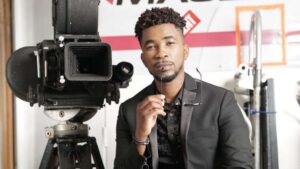
In the heart of Atlanta, I sat down with Haitian filmmaker Robenson Lauvince to discuss one of the most anticipated international films in recent years: July 7th: Who Killed the President of Haiti? What began as an exploration of a tragic political event unfolded into a conversation about legacy, truth, and the power of telling your own story.

From the opening of our conversation, Lauvince made it clear—this was more than just a movie. “It’s the first time we get to talk about ourselves,” he said. And he meant that literally. With 90% of the cast and crew being Haitian, the film is deeply intentional in its authenticity. Shot in Creole and French, and featuring cultural giants like former Miss Universe Haiti and acclaimed author Gary Victor, the project is a landmark achievement in Haitian storytelling.

A Story That Had to Be Told

When asked what compelled him to tell this story, Robenson didn’t hesitate. “Haiti is the first Black independent nation in the world,” he said, passionately. “But we’ve always been silenced. Misrepresented. Forgotten.” That frustration turned into fire, fueling a production that became his most serious and personal work to date.

The film’s gripping trailer—tense, evocative, and emotionally rich—set the tone for what audiences could expect. But Robenson revealed it wasn’t just crafted for impact—it was a solo mission. Due to the language barrier with his production team, he had to create the trailer on his own. “I wanted it to feel urgent. Honest. I wanted people to want more.”

Not Just a Day, But a Movement

While the film’s title references the day Haitian President Jovenel Moïse was assassinated, Lauvince emphasizes that the story isn’t confined to that moment. “This isn’t about one day,” he said. “It’s about how we got here. About a system designed to divide us.”

The film dives deep into Haiti’s historical, cultural, and spiritual foundation. It’s a layered portrayal of a people often painted in a singular, monolithic way. And it’s not afraid to hold a mirror up to internal conflict either—highlighting how systemic manipulation often turns Haitian against Haitian.

A Global Response Rooted in Pride

With over $60,000 in pre-sale tickets and a Miami premiere that drew over 2,000 attendees, the response has been overwhelming. Haitians across the globe—UK, Africa, Canada, and beyond—bought tickets even if they couldn’t attend. “We’re prideful,” Robenson said. “When one of us does something good, we show up.”

That energy has caught on outside of the Haitian community too, with African-American executive producers and allies joining the movement. “Our PR rep is a woman, my assistant director is a woman—it’s women that have driven this engine.”

The Risk and the Reward

Taking on a story of this magnitude wasn’t just emotionally heavy—it was dangerous. “This kind of truth-telling comes with risk,” Robenson admitted. “People don’t know your intentions. They don’t know what you might reveal.”

Robenson Lauvince, Director

But the reward? Global distribution. A cultural awakening. And perhaps most importantly, a reminder to Haitians everywhere that their voice, their pain, and their power matter.

“We can’t wait for others to tell our stories anymore. If you’re a singer, sing. If you’re a writer, write. If you’re a filmmaker, make films. That’s how we take our voice back.”

As for what’s next? Robenson teased more Caribbean-rooted stories—less political, but equally powerful. And while he carries the weight of a nation’s voice, he does so with pride, clarity, and unshakable purpose.

WATCH THE TRAILER: