
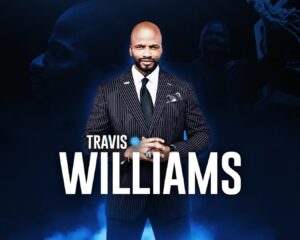
Changing the Scoreboard: Travis L. Williams Is Creating Opportunities Beyond Basketball

Some people build careers.
Others build legacies.
For Travis L. Williams, legacy was never simply about basketball. It was about creating opportunities, opening doors, and making sure future generations could see possibilities that once seemed out of reach.
Today, Williams is known nationally as the founder and CEO of HBCU All-Stars, a groundbreaking platform dedicated to increasing visibility, access, and opportunities for student-athletes attending Historically Black Colleges and Universities. But long before he was leading a nationally recognized movement, he was simply a young boy from South Georgia trying to navigate life after unimaginable loss.
At just 12 years old, Williams lost his mother to lupus.
The loss could have easily become the defining chapter of his story.
Instead, it became the fuel.
“I could have used it as an excuse,” Williams reflected. “But my faith wouldn’t allow me to.”
Raised by family members and guided by the prayers of his mother and grandmother, Williams learned early that circumstances do not have to determine outcomes. Though he grew up without wealth, privilege, or a roadmap to success, he carried something equally valuable: belief.
That belief would eventually lead him to become the first person in his family to attend and graduate from college.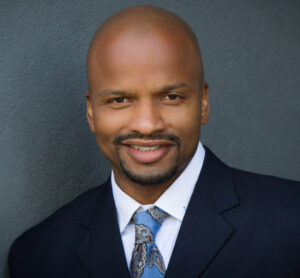
But before college became reality, it first had to become possible.
Williams recalls a pivotal moment with his high school basketball coach—a conversation that would change the trajectory of his life forever.
When asked what his plans were after graduation, Williams confidently replied that he intended to join the military.
College wasn’t even on his radar.
“No one in my family had gone to college,” he said. “I didn’t know what that path looked like.”
His coach saw something different.
He walked Williams to the guidance counselor’s office, reviewed his transcript, and helped him understand that higher education was within reach.
That belief led to a basketball scholarship at Georgia State University, where Williams would earn both his undergraduate degree and a master’s degree while building the foundation for what would become a remarkable coaching career.
For 17 years, Williams poured into young athletes as a collegiate basketball coach.
He coached at multiple levels, led programs, developed talent, and helped shape future leaders.
Yet even with a successful coaching career, God had another assignment waiting.
In 2019, while many would have been focused on climbing higher in coaching, Williams felt called in a different direction.
A vision arrived that would ultimately become HBCU All-Stars.
“God told me not to worry about coaching,” Williams explained. “He told me I was going to do something that would change the narrative around HBCUs.”
It was a bold vision.
And perhaps an even bolder decision.
Leaving behind a career he loved was not easy. But Williams knew the mission was bigger than him.
What started as an idea has now grown into a nationally respected organization that serves as a platform for exposure, opportunity, scholarship support, professional development, and community engagement.
At its core, HBCU All-Stars exists because Williams recognized a painful reality.
For decades, HBCU athletes have produced exceptional talent.
Yet many have not received the same visibility afforded to athletes at larger institutions.
The issue was never talent.
The issue was access.
“The scouts aren’t always coming to our campuses,” Williams said.
Rather than waiting for the system to change, he decided to create something that would bring opportunity directly to the athletes.
Today, HBCU All-Stars hosts an annual showcase during college basketball’s biggest weekend—the Final Four—strategically placing HBCU athletes in front of NBA scouts, G-League personnel, international recruiters, and basketball executives already gathered in one location.
The results have been transformative.
Players have gone on to professional opportunities across the NBA, G-League, international leagues, and even global platforms like the Harlem Globetrotters.
But basketball is only one piece of the story.
What separates HBCU All-Stars from traditional sports showcases is its commitment to the whole student.
Over the last five years, the organization has impacted more than 10,000 students through college admissions and scholarship fairs.
More than 1,000 interns have received hands-on professional experience in journalism, sports marketing, television production, public relations, game management, and event operations.
Scholarships have been awarded.
Cap and gowns have been donated.
Community leaders have been recognized.
Conversations around social justice, civic engagement, and leadership have been elevated.
In every city they visit, Williams ensures the mission extends far beyond the basketball court.
“This is bigger than basketball,” he said repeatedly throughout our conversation.
And he means it.
Perhaps the most remarkable aspect of Williams’ work is his refusal to separate success from service.
Every initiative is rooted in a belief that representation matters.
Access matters.
Opportunity matters.
And for young Black students and student-athletes, seeing someone who looks like them occupying spaces they aspire to reach can change everything.
Williams knows that firsthand.
He was once the young man who needed someone to believe in him.
Now he spends his life becoming that person for others.
As college athletics continues to evolve through NIL opportunities and shifting landscapes, Williams remains focused on one goal: ensuring HBCU students are never left behind in the conversation.
He believes the talent has always been there.
The excellence has always been there.
The potential has always been there.
What has often been missing is visibility.
Ten years from now, Williams hopes HBCUs receive the same respect, resources, and recognition as any major institution in America.
He hopes NBA scouts routinely visit HBCU campuses.
He hopes more HBCU athletes are competing professionally.
He hopes more HBCU graduates are leading corporations, organizations, and communities.
Most importantly, he hopes the next generation understands that success is possible regardless of where they begin.
When asked what message he wants young people to remember, his answer was simple but powerful:
“Don’t be afraid to be told no.”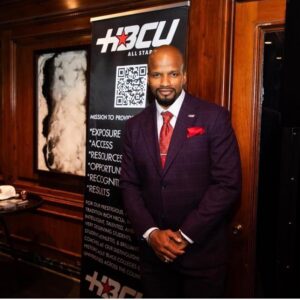
For Williams, every rejection is simply another step toward the right opportunity.
After all, a young boy from South Georgia who lost his mother at twelve years old wasn’t supposed to become a national leader.
He wasn’t supposed to build a movement.
He wasn’t supposed to change the narrative.
And yet, here he is.
Proof that sometimes one yes is all it takes.
And proof that when purpose meets faith, entire communities can win.